

Tree First
Trunk diameter and branching set every dimension above it. Choosing the tree after the house is why so many renders look like a cabin glued to a sapling.
Prompt Guide
Model
Reference Image
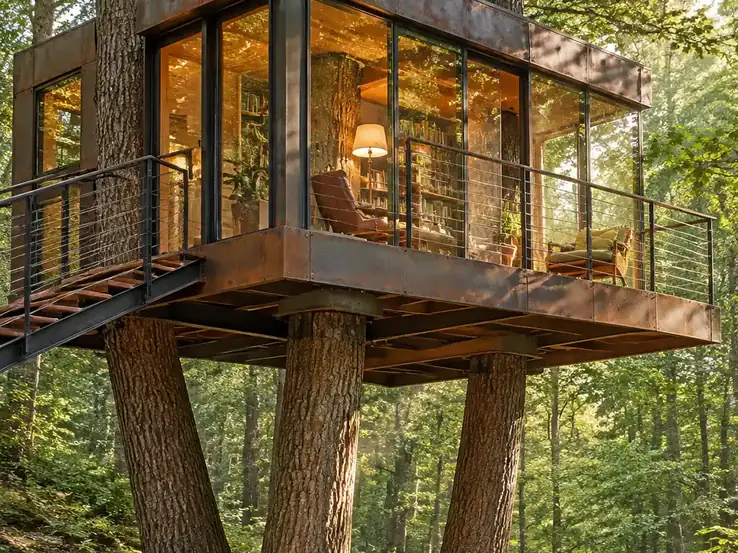
Name the tree, the season and how the deck is held up, and get a tree house image for a moodboard, a story or a first conversation with a builder.
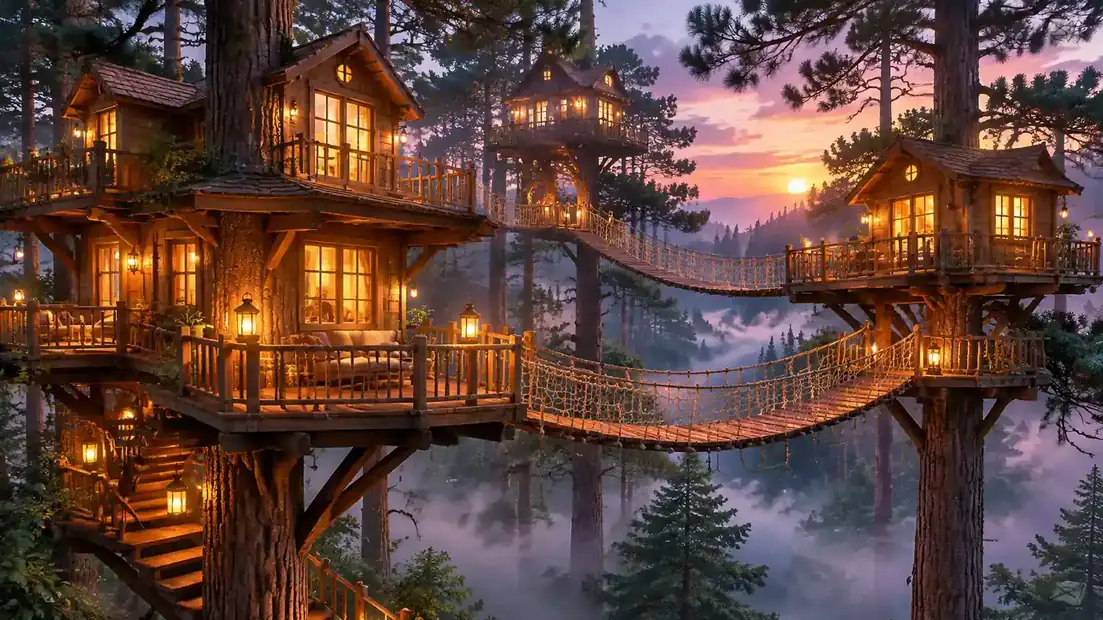
Tree, structure, then light.
Oak, birch, pine, banyan. Species sets trunk width, branching height and how much canopy the deck can sit inside, and a generic tree cannot carry a structure.
Say how the deck is held: posts to the ground, diagonal braces, a collar around the trunk. A platform with no visible support is the fastest way to make a frame read as fantasy.
Summer canopy hides the joins; bare winter branches show the engineering. Pick the season that shows what you want the viewer to notice.
Outside at dusk for atmosphere, inside at eye level for layout. An interior shot explains how the space is used, and an exterior explains how it stands up.
Ten builds across four settings, from dome pods in the pines to a village at canopy height.
 Studio
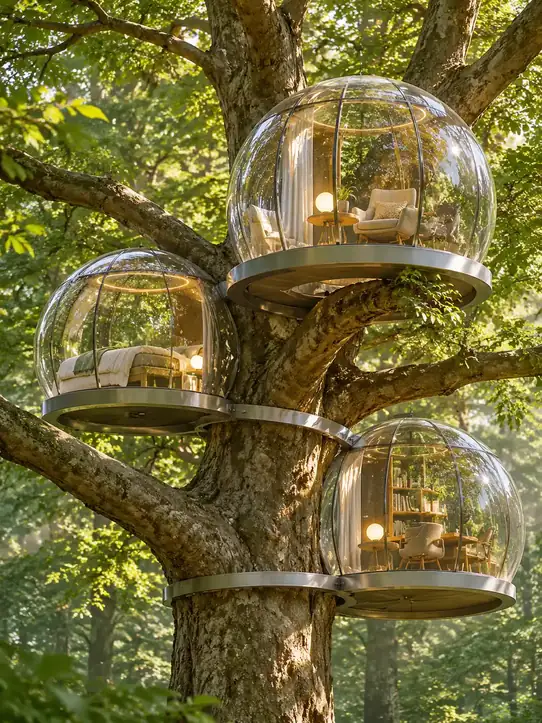
Three glass dome pods in a beech tree, steel rings, forest light, 3:4
Try This Style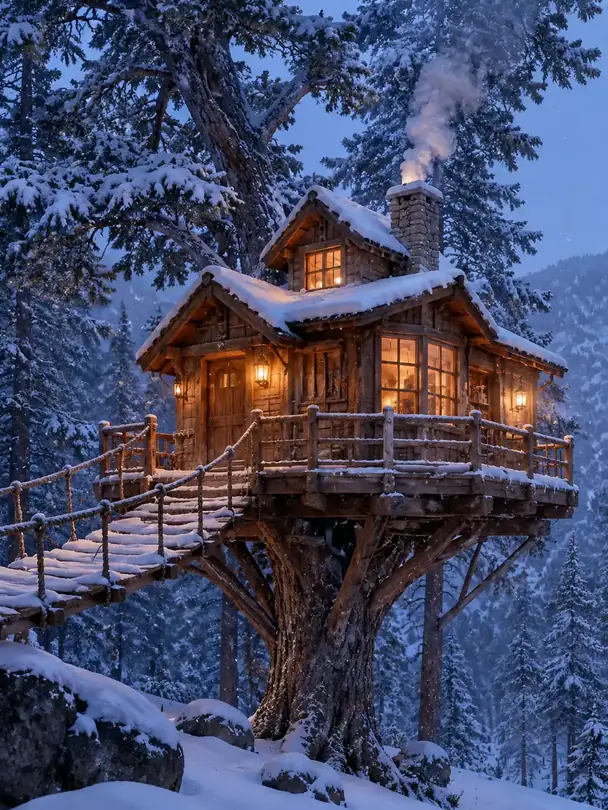 Studio
Timber tree house in snow, warm windows, stove smoke, blue dusk, 3:4
Try This Style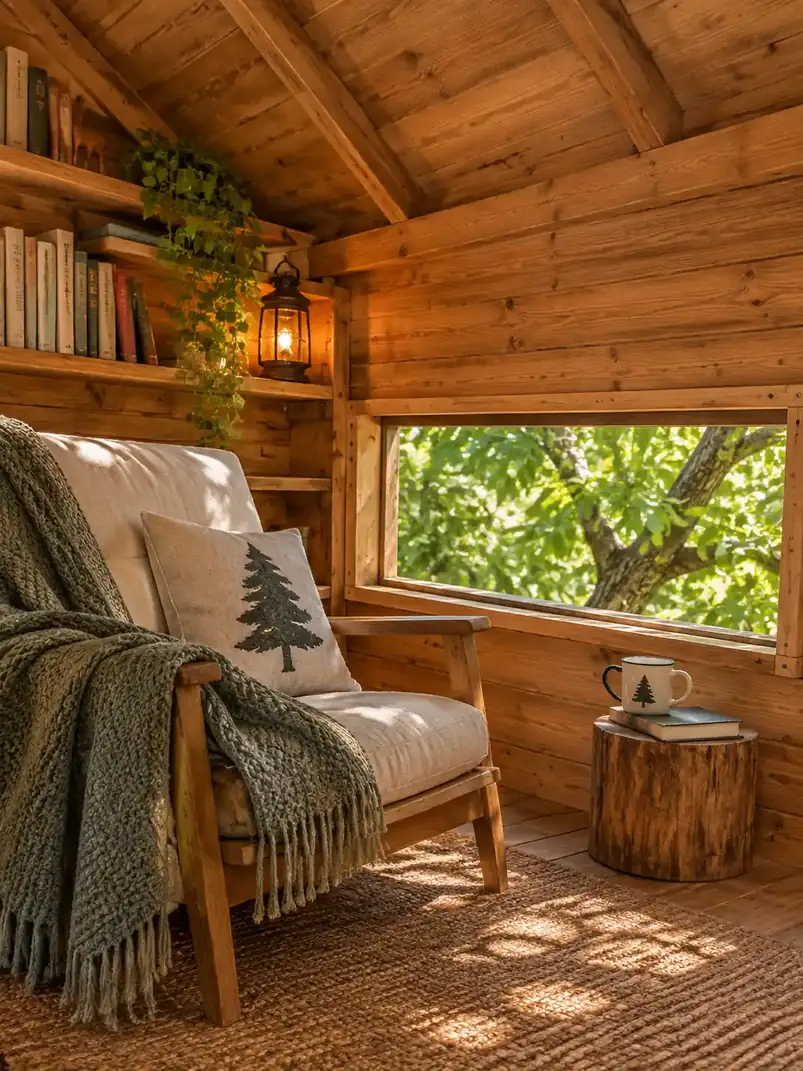 Studio
Tree house interior with a chair and a low window onto leaves, 3:4
Try This Style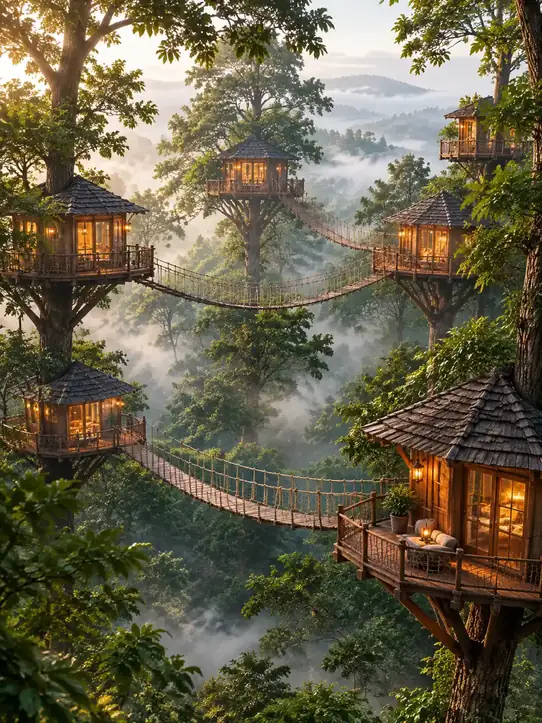 Character
Five tree houses linked by rope bridges, canopy, morning mist, 3:4
Try This Style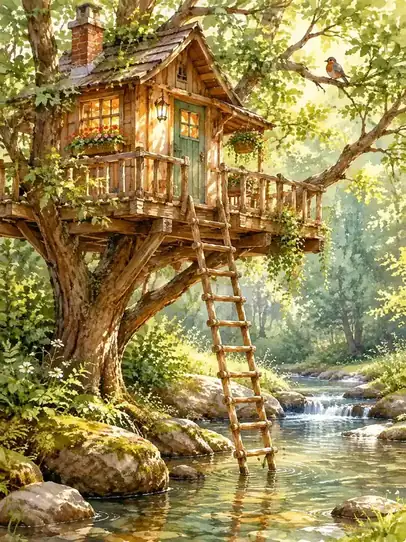 Character
Tree house over a creek, ladder down to the water, dappled light, 3:4
Try This Style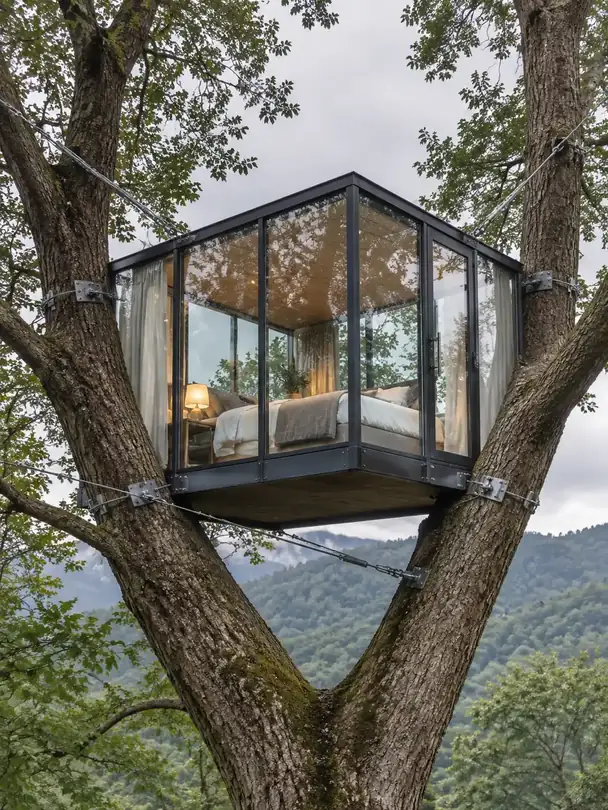 Character
Glass cabin wedged in a fork, steel cable bracing, overcast light, 3:4
Try This Style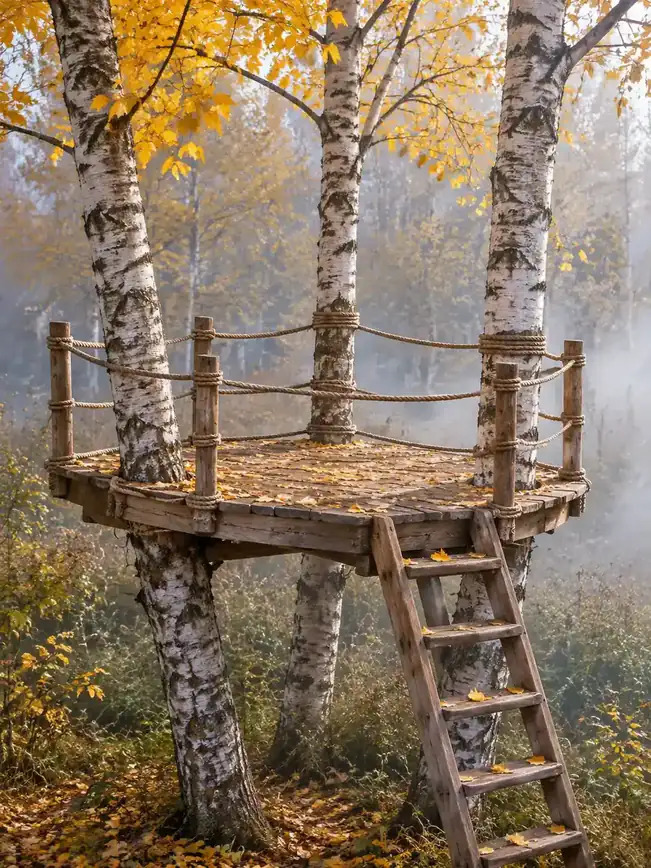 Scene
Round deck built around a birch trunk, low railing, autumn, 3:4
Try This Style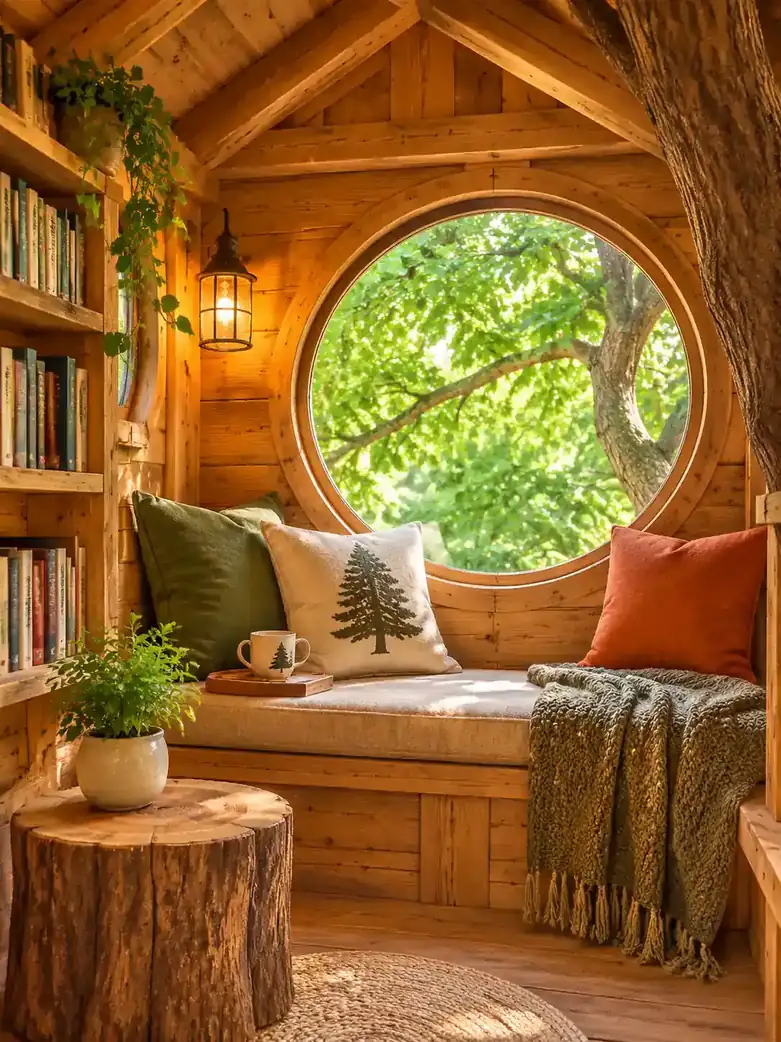 Scene
Suspended reading nook with cushions, rope net, afternoon light, 3:4
Try This Style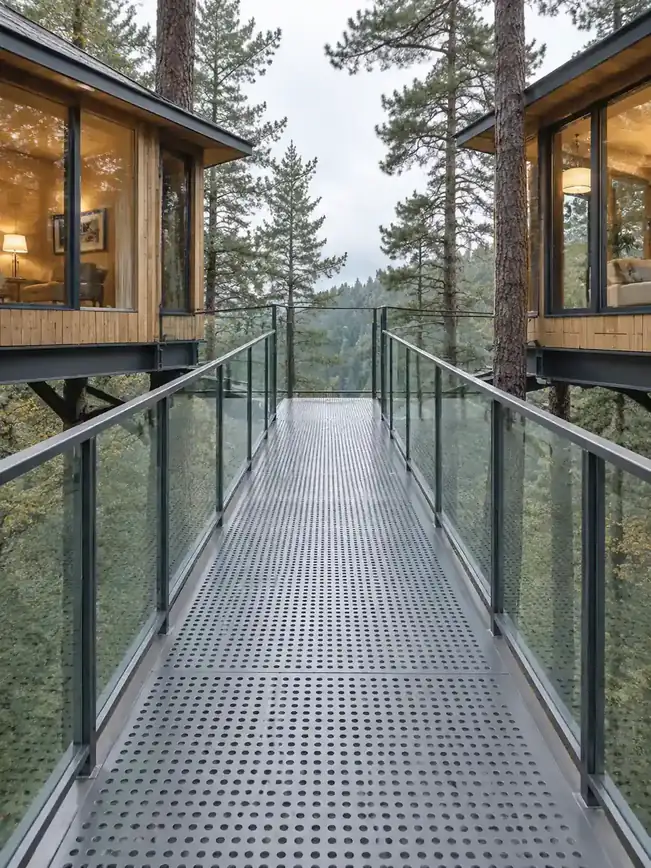 Detail
Steel walkway spiralling a trunk, mesh floor, tall canopy, 3:4
Try This Style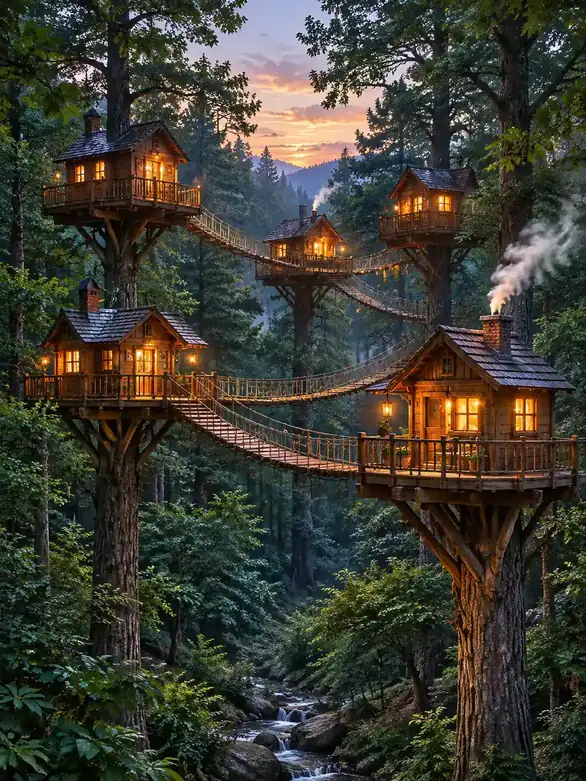 Detail
Wide view of a canopy village at sunrise, roofs above the leaves, 3:4
Try This StyleStructure, support and one honest material detail.
Trunk diameter and branching set every dimension above it. Choosing the tree after the house is why so many renders look like a cabin glued to a sapling.
Posts, braces and a trunk collar explain the load. Ask for them by name, and the structure stops looking like it is resting on nothing.
Snow on a roof and mist in the canopy change the mood without changing the design. Render one build in two seasons and you have a set for free.
An interior frame shows a reading nook and a window onto leaves. An exterior shows the bridges and the height. One page usually needs both.
Spans, footings and load paths need an engineer. A generated image cannot carry that information, so treat every dimension in it as decoration.
3:4 for a framed print, 16:9 for a screen. Ask for the shape you will print, then compose the canopy inside it rather than cropping the tops of the trees.
We wanted a tree house for our two boys and used this to settle what it should look like. The dome pods in the pines was the version they picked, and our builder used it to explain why the plan needed two ground posts instead of one.
My first render was a cabin floating in branches with nothing under it. Asking for posts and diagonal braces to the ground is what made it look buildable, and that also made the picture useful rather than just pretty.
I write children's stories and use the village group for settings. It gives me a canopy village with bridges that I could never draw, though I would not show one to a carpenter, since none of the joins would survive a real load.
It can produce a concept image to discuss, not a buildable plan. Describe the tree, the deck and the access, and use the result to agree a direction with a builder before anyone measures a trunk.
Support has to be drawn, not implied. Ask for posts, diagonal braces and a visible connection at the trunk. A deck with no structure under it is the fastest way to make the image read as fantasy.
No. Name the species and the trunk spacing instead. A photo helps you describe the branching, but the output is a new concept, so a rough description of an oak or a birch is enough to begin.
The first render is free. Sets, large prints and faster models need a paid plan, and the free model is listed first in the picker before you run anything.
No. Spans, loads and footings need an engineer, and a generated image cannot carry that information. Use it as a brief for a professional, and treat every dimension in the picture as decorative.