

Power First
The costume follows the ability. A heat hero needs vents and singed edges; a gravity hero needs weight at the boots. A costume chosen before the power is just a bodysuit.
Prompt Guide
Model
Reference Image
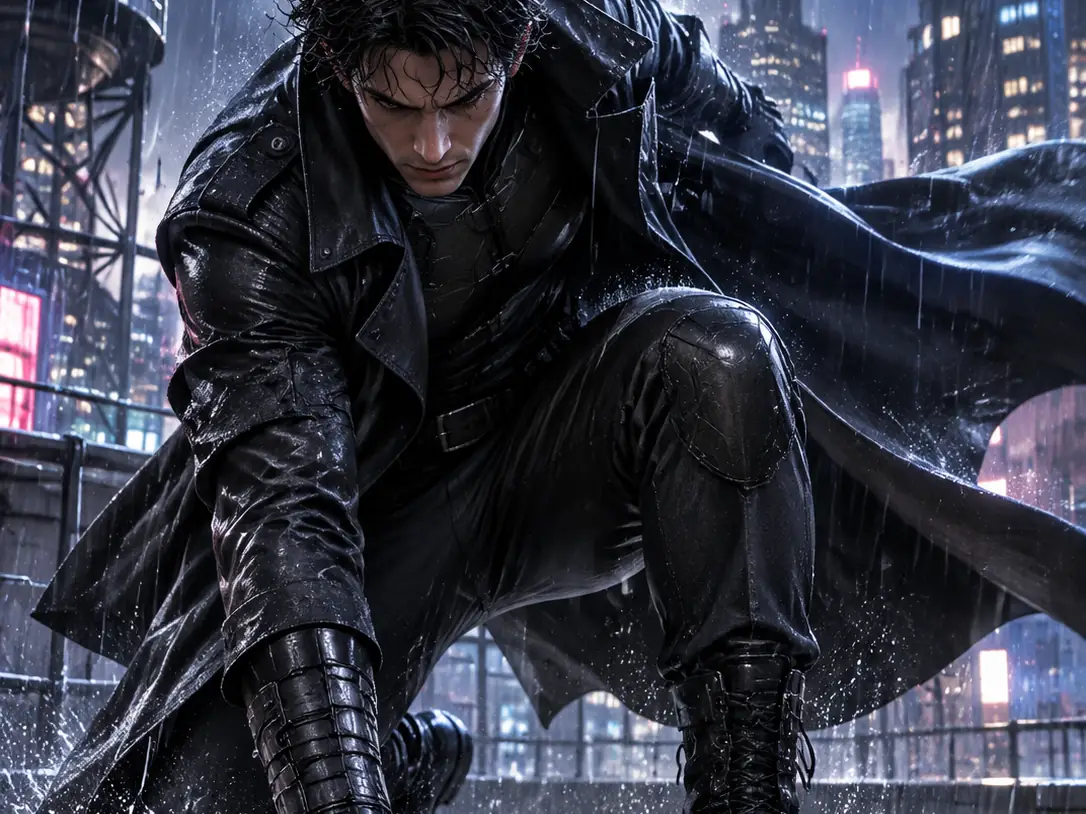
Name the power, its cost and the city, and get an original hero whose costume explains what they do, with a silhouette that still reads at thumbnail size.
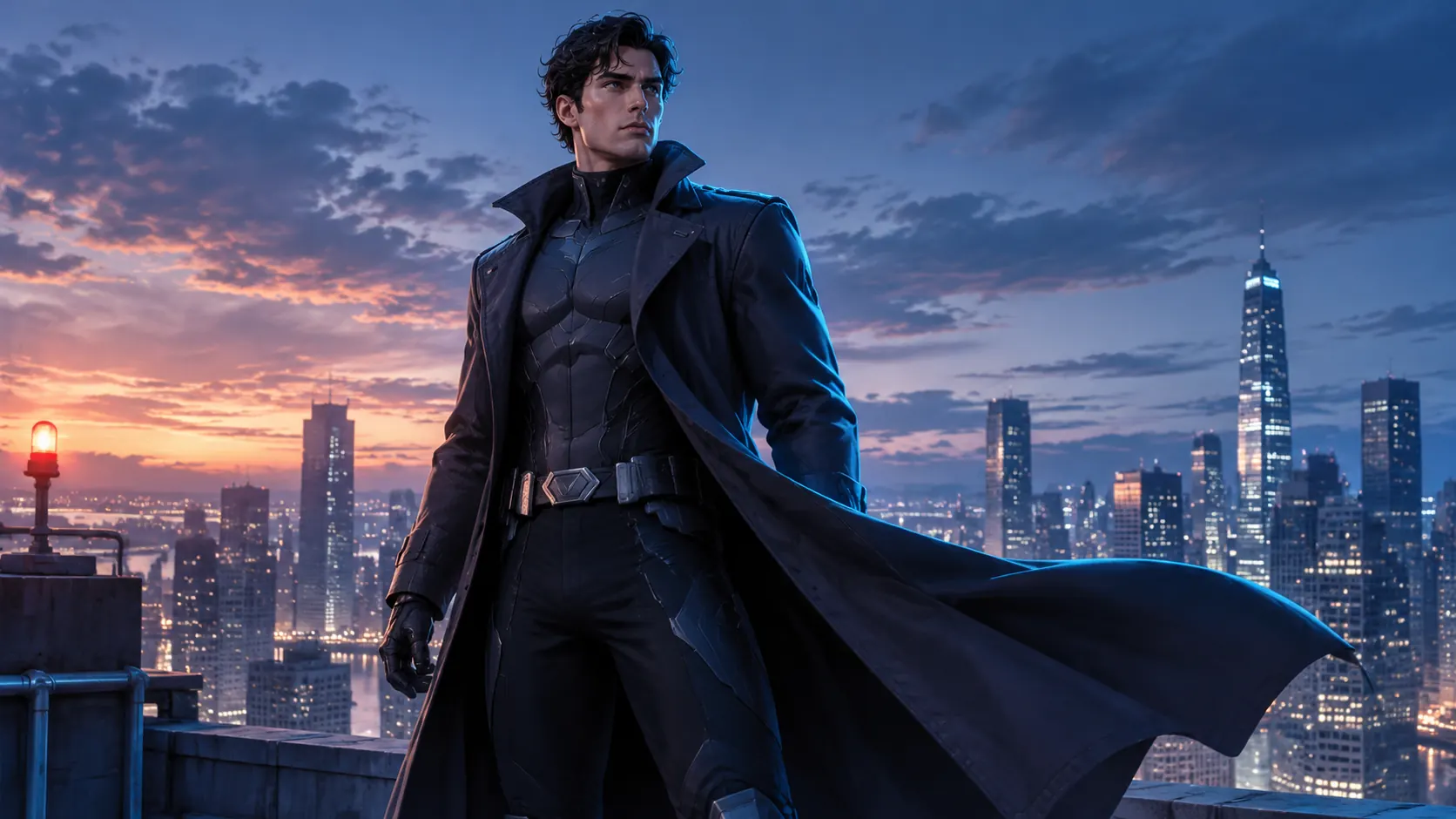
Silhouette, source, scene
Speed, heat, gravity, sound. Then name the cost, since a power with a limit has a body language, and a hero with no limit has no design problem to solve.
Say what the shape is from twenty metres: a long coat, a heavy shoulder, a trailing scarf. If the outline is generic, no amount of detail will make the character memorable.
A rooftop, a flooded street, a bridge. The city explains what the hero protects, and the height explains why the cape or the coat is moving the way it is.
Count the fingers and look at the grip. A hand raised to fire, hold or catch is where generated anatomy most often fails, and it is also the most important gesture in the frame.
Ten heroes across four shots, from a rooftop watch to a costume detail sheet.
 Studio
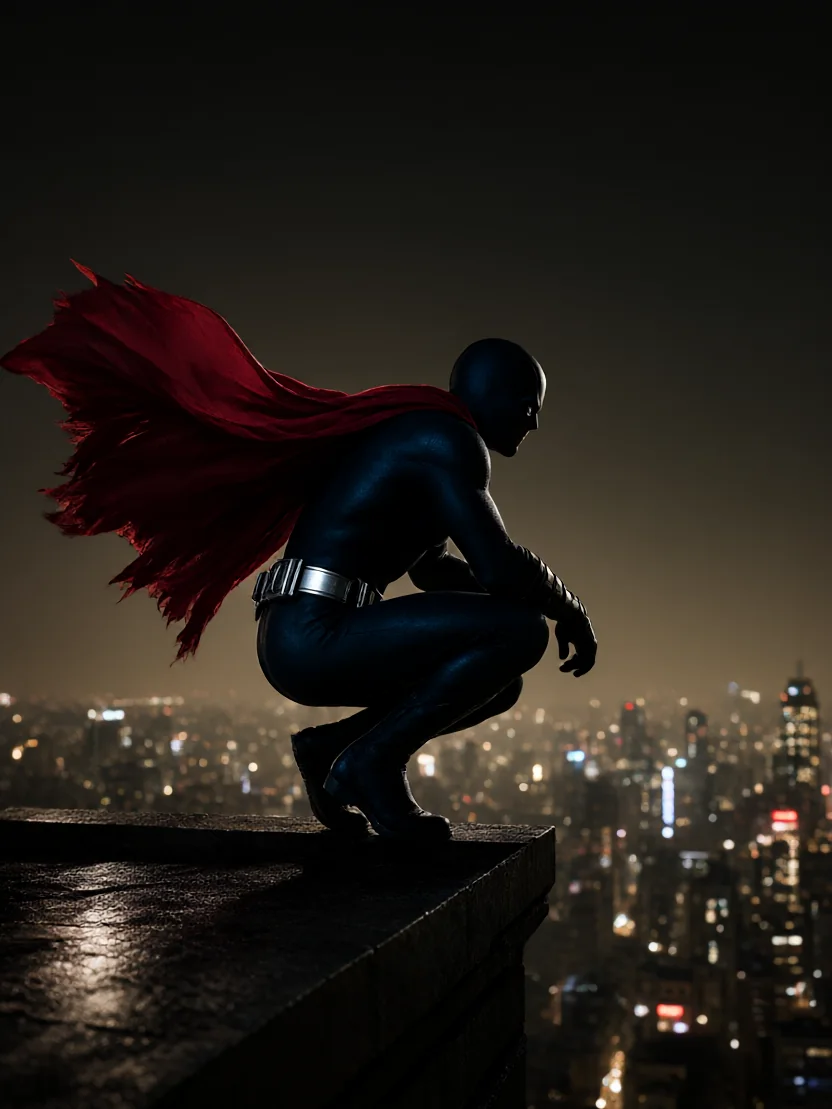
Hero crouched on a rooftop edge at night, city lights, low angle, 3:4
Try This Style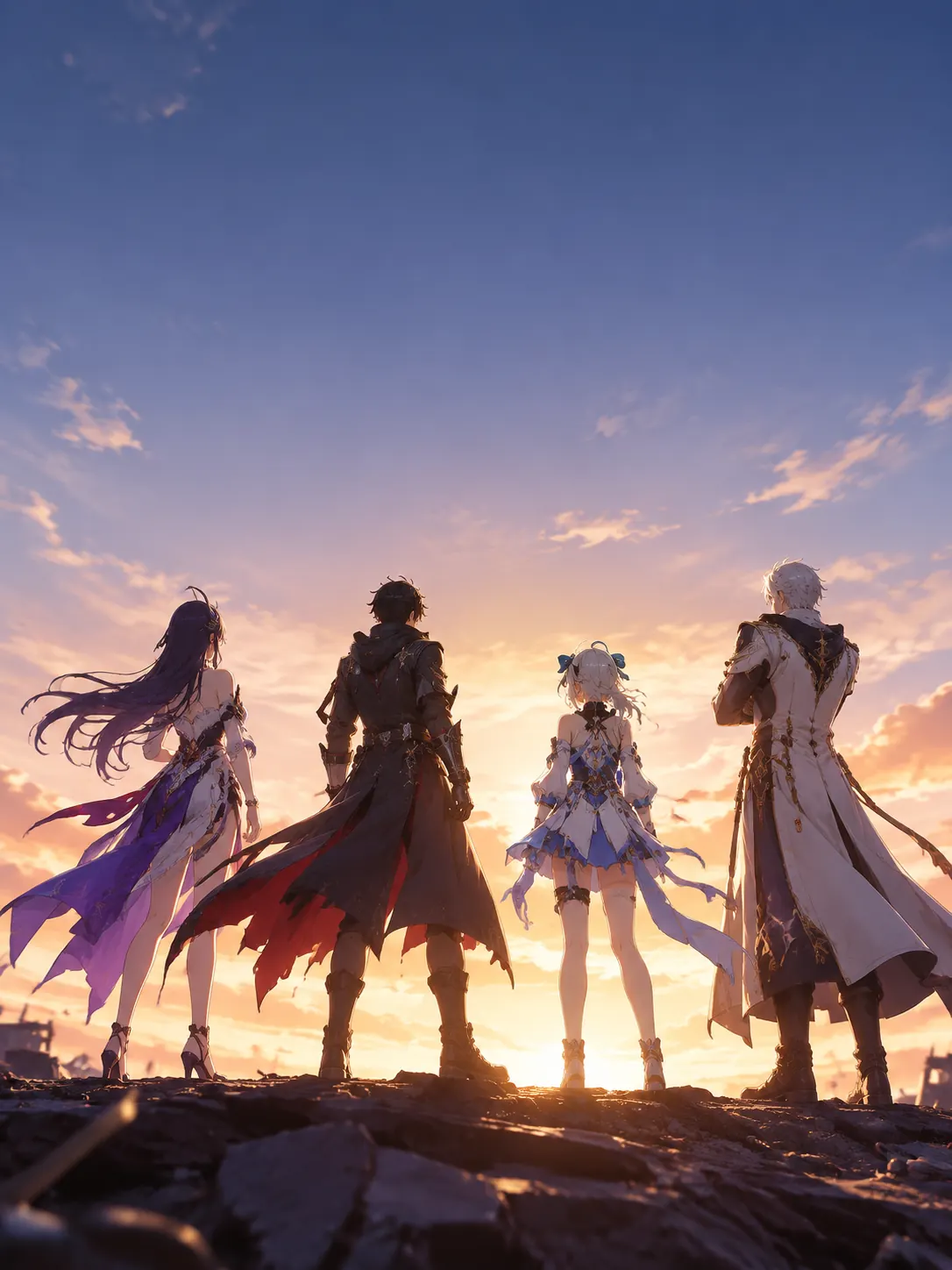 Studio
Four heroes in a backlit lineup, empty sky band, 3:4
Try This Style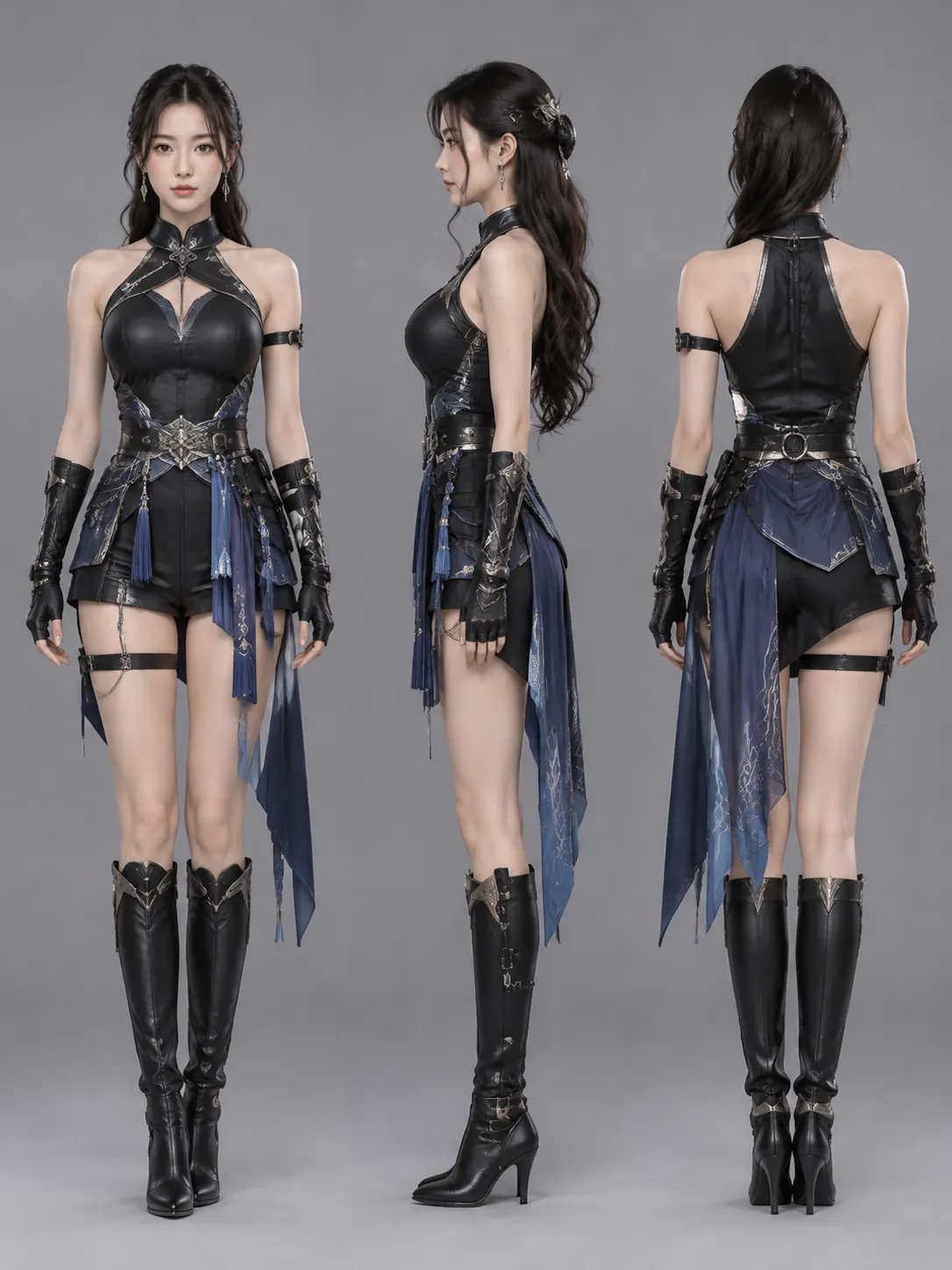 Studio
Costume turnaround, three views, plain grey backdrop, 3:4
Try This Style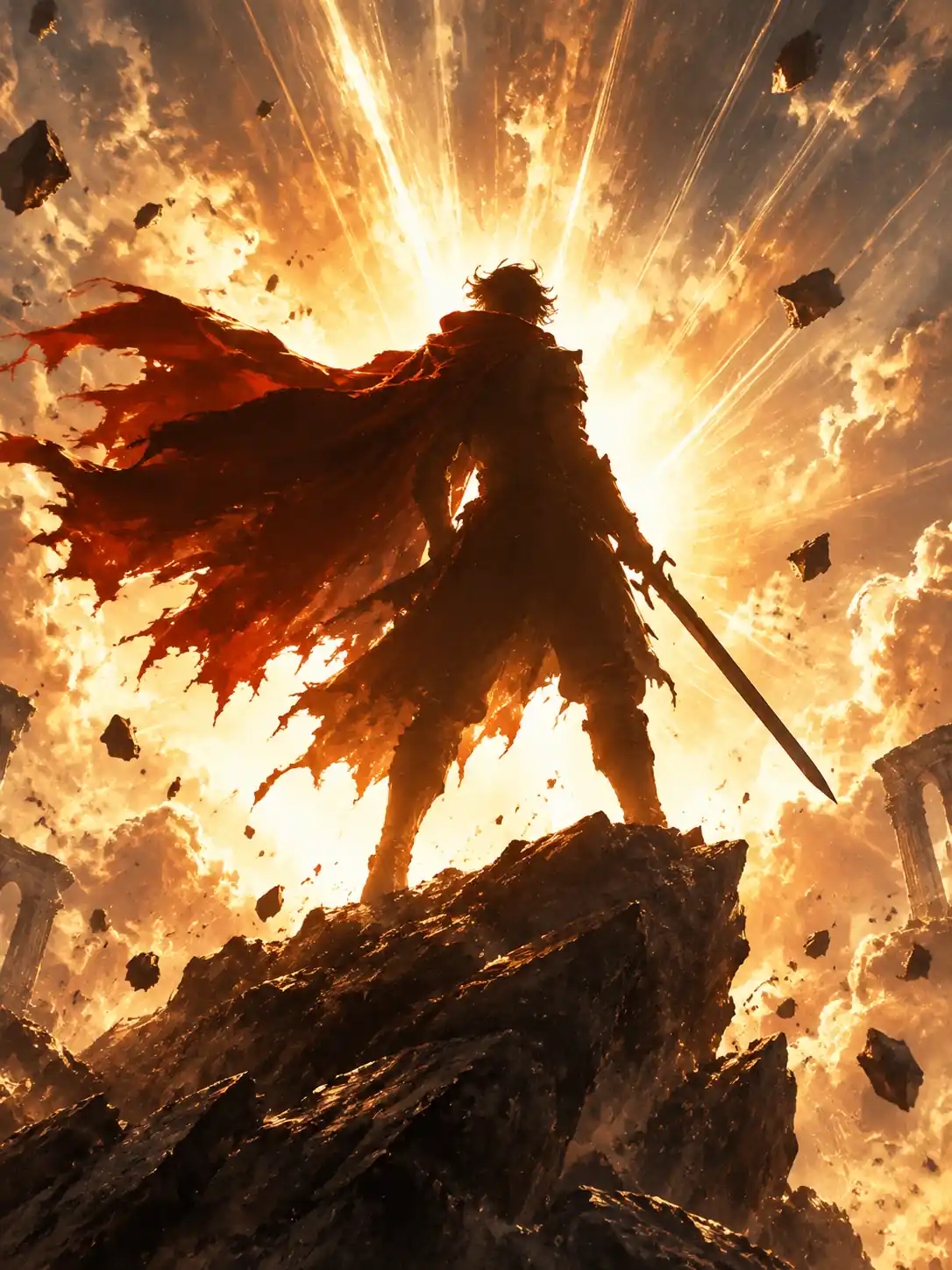 Character
Hero silhouetted in a burst of light, debris, 3:4
Try This Style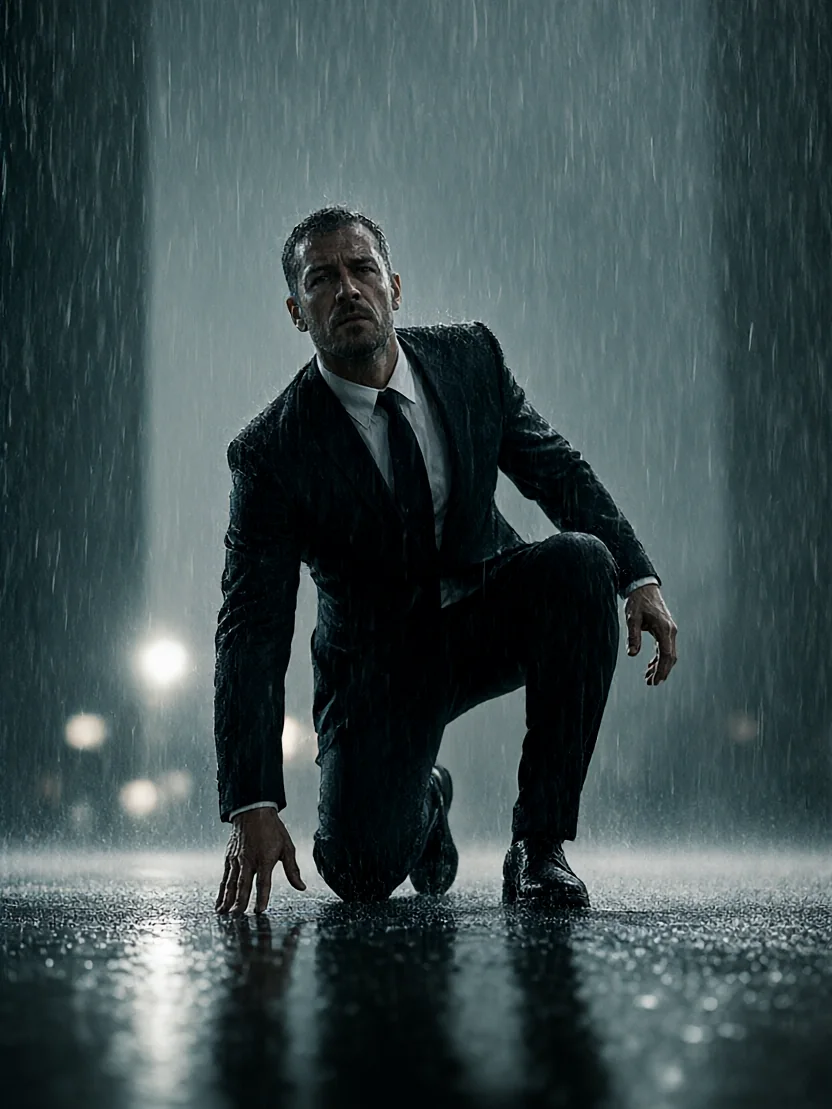 Character
Hero landing on wet asphalt, knee down, rain, 3:4
Try This Style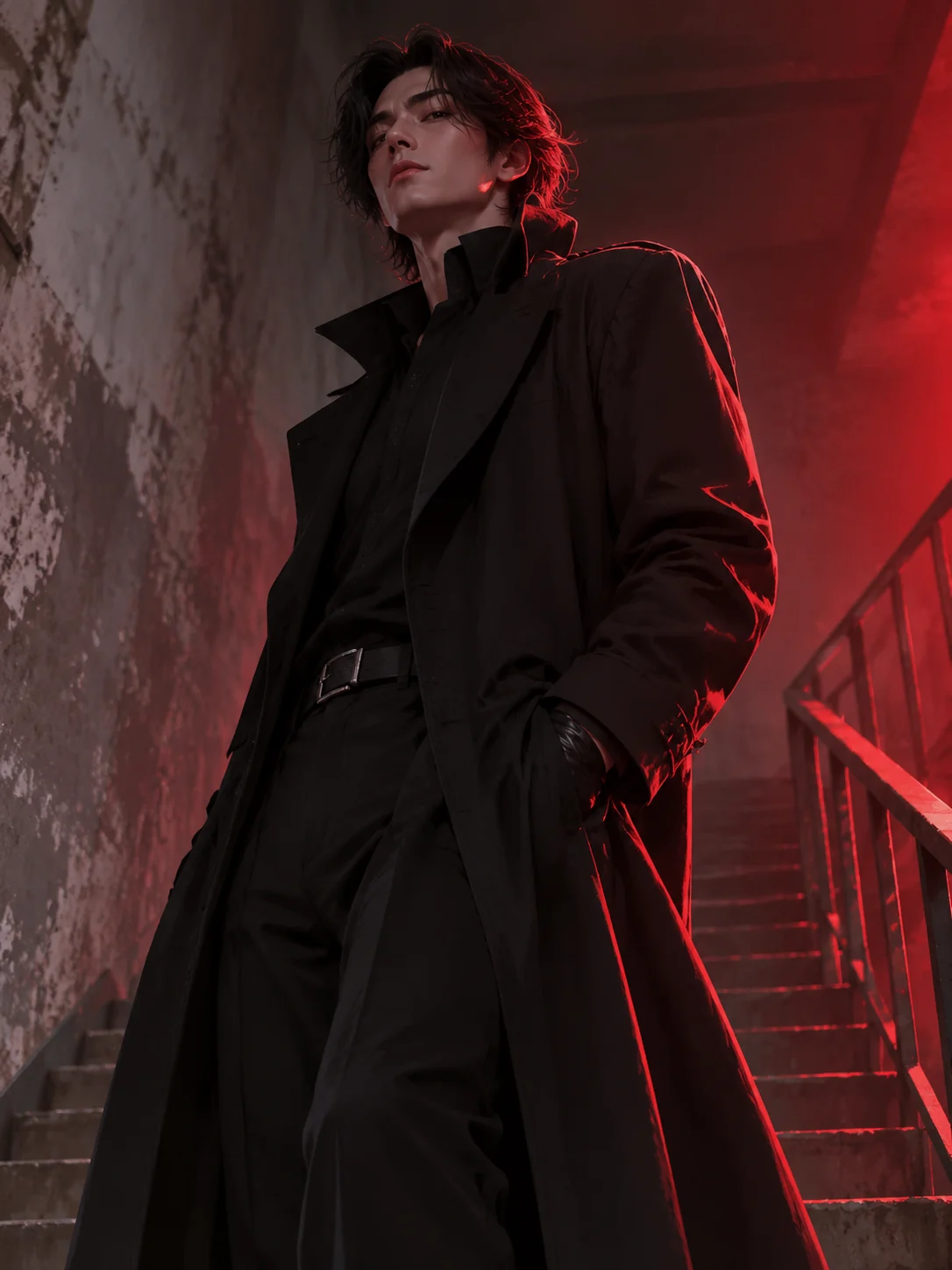 Character
Villain in a long coat on a stairwell, red rim light, 3:4
Try This Style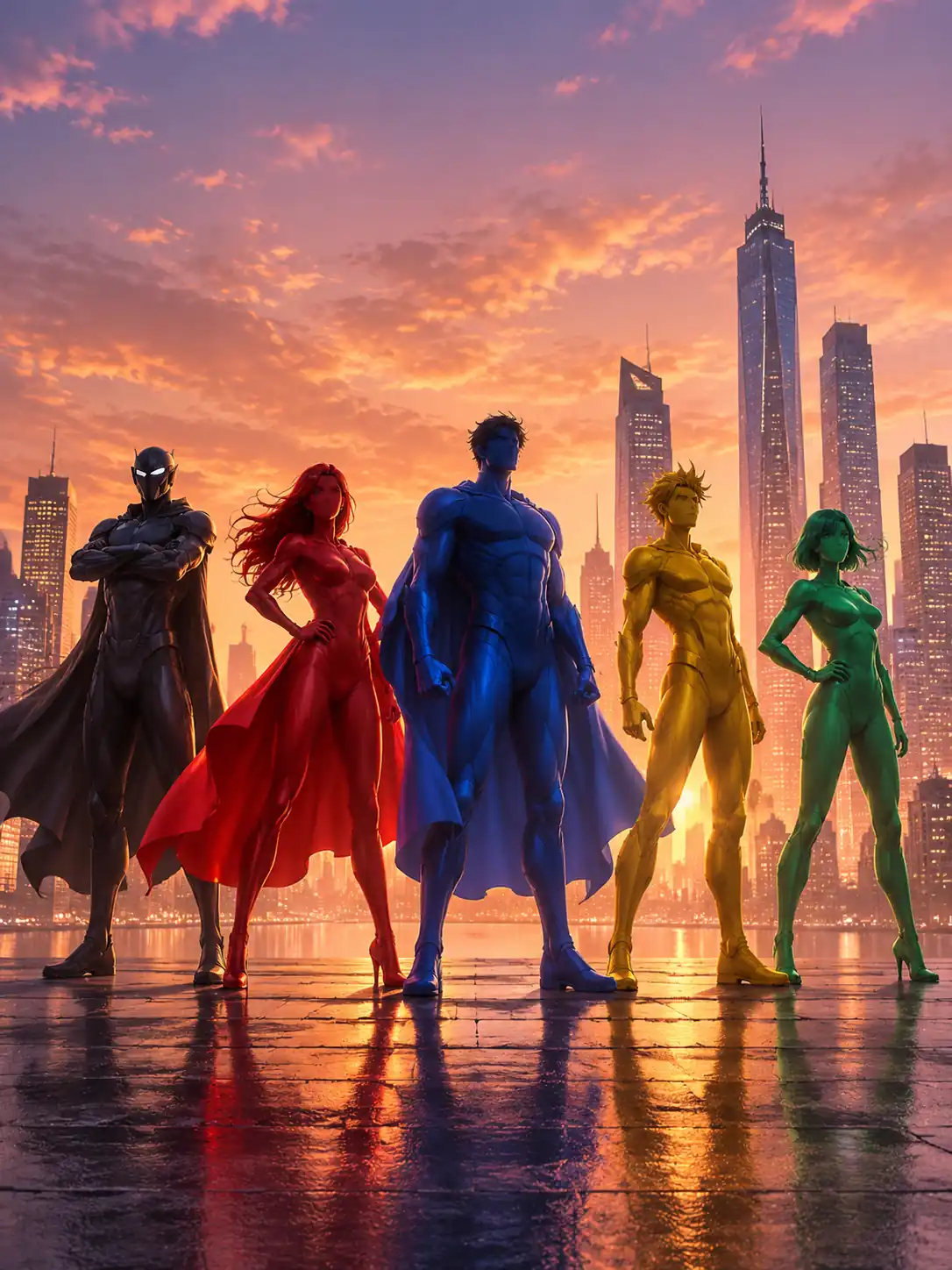 Scene
Five heroes standing in a line, flat light, grey backdrop, 3:4
Try This Style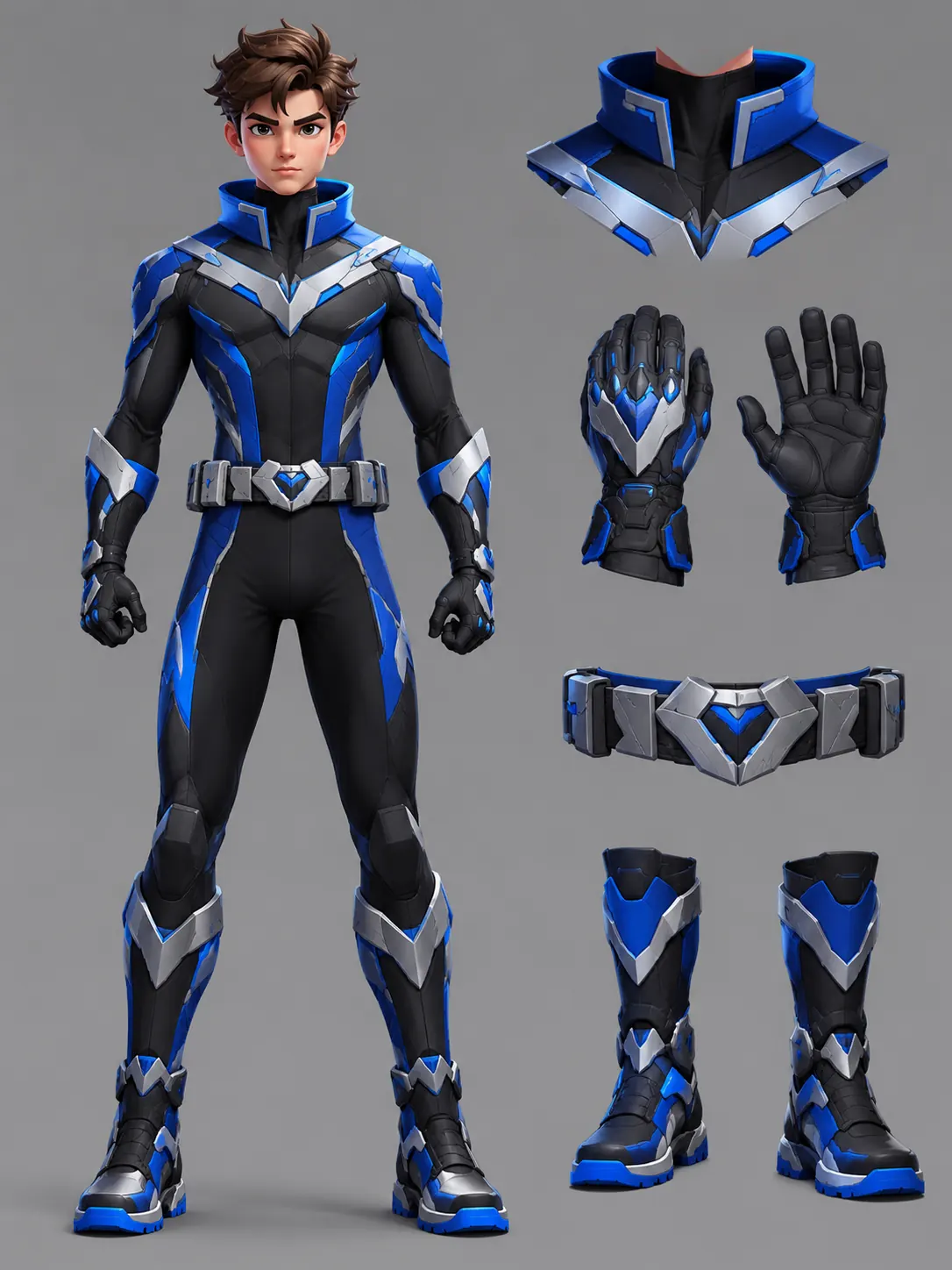 Scene
Costume detail sheet, boots, belt and gloves, flat light, 3:4
Try This Style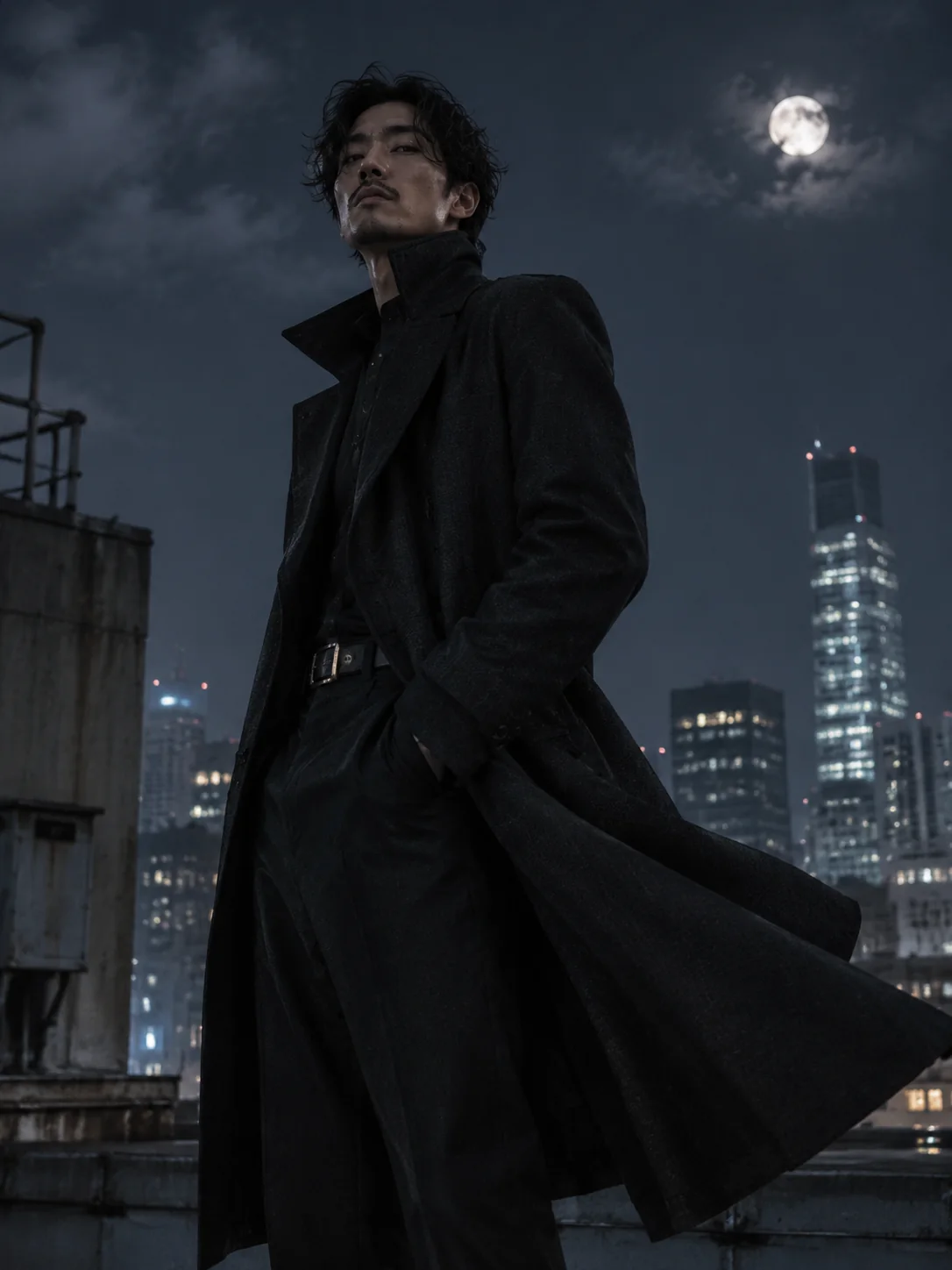 Detail
Villain on a rooftop at night, coat in wind, 3:4
Try This Style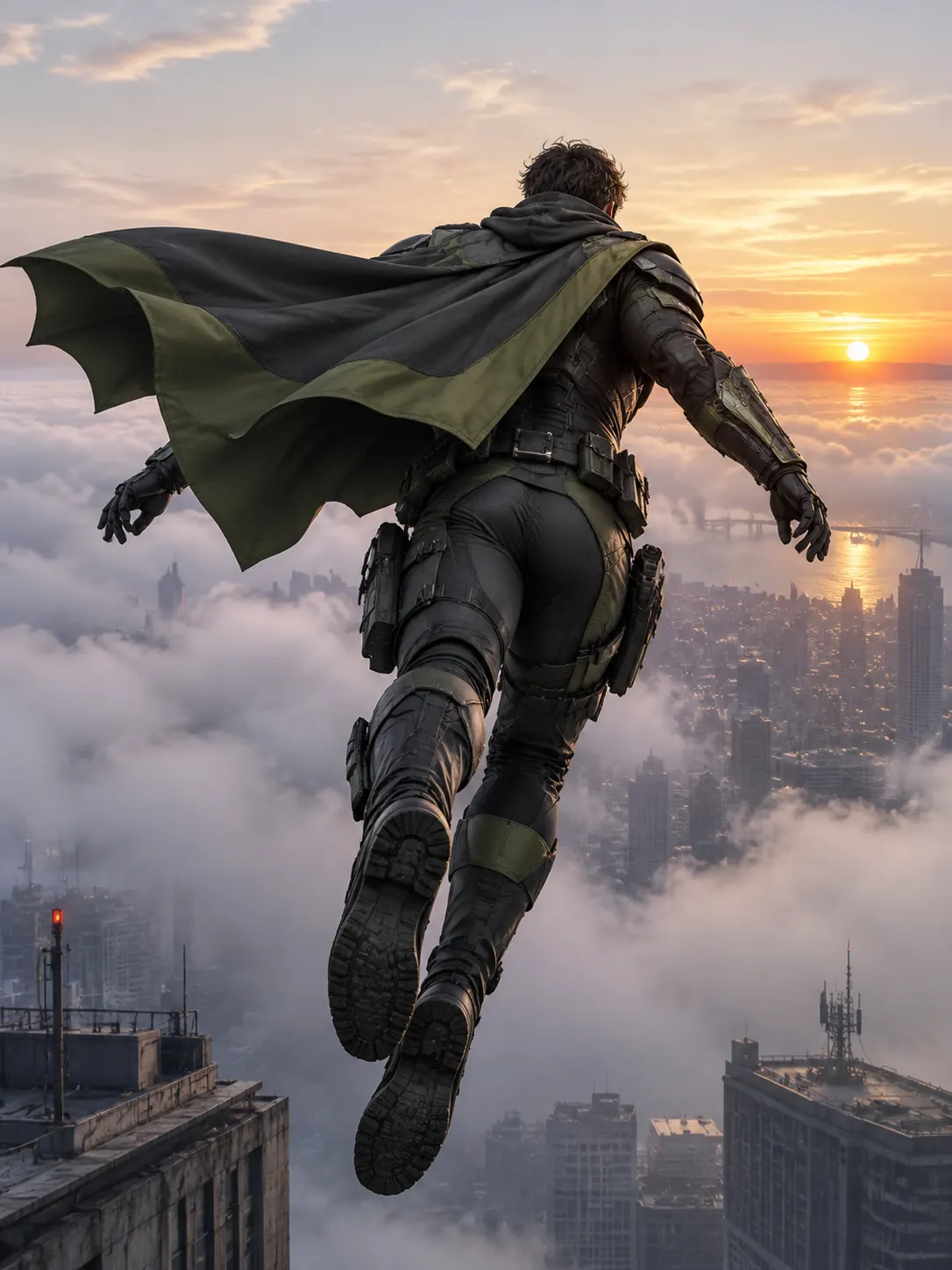 Detail
Hero flying between midtown towers, low cloud, 3:4
Try This StyleThree decisions before generating
The costume follows the ability. A heat hero needs vents and singed edges; a gravity hero needs weight at the boots. A costume chosen before the power is just a bodysuit.
Abstract emblems and unnamed materials keep the design clear of a studio property. Every character here is generated, and none of them is a licensed hero.
Shrink the frame to a thumbnail and squint. If you cannot tell the hero from the villain, the shapes are too similar, and no colour change will fix that.
A poster sells a story with one pose. A turnaround sheet sells a design with four views. A page usually needs the poster first and the sheet only if someone has to build the character.
A skyline or a flooded street gives scale and stakes. A hero on a plain gradient has no world, which makes the power look like a costume test rather than a story.
Chest marks and belt buckles drift toward familiar shapes. Ask for an abstract emblem with no lettering, and the design stays yours and stays out of a licensing problem.
I write a webcomic and needed a team of five that looked like they belonged together. Naming each power and its cost gave me five different silhouettes, and the rooftop group made the line-up read as one city rather than five separate sketches.
My hero kept looking like a famous one because of the chest emblem. Asking for an abstract mark with no lettering, and moving the palette away from red and blue, is what finally made the design feel original.
I use the turnaround sheet for a tabletop game and the poster for the cover. The sheet is the practical one, since four views tell a sculptor what to build, though I redraw the hands before anything gets printed.
Yes. Name the power, its limit and the city, and the costume follows the power. Every design is generated, so nothing is copied from a studio character, which keeps a comic or a campaign clear of licensing.
Chest marks and capes drift toward known designs. Ask for an abstract emblem, describe a different material and keep the palette away from a famous red and blue. A silhouette test at thumbnail size shows what is actually reading.
No. The hero is built from words. One popular request is a portrait of yourself as a hero, and if you do that, use your own picture and keep it private rather than publishing a likeness of someone else.
The first hero is free in the workspace. Team posters, character sheets and faster models need a paid plan, and the free model is marked at the top of the picker.
Check the licence for the model you used, and keep the character original. Since the design is generated, do not present it as someone else's property, and avoid marks that resemble a known logo.