

Era-aware character briefs
Separate historical inspiration, contemporary fiction, and future settings so the clothing and equipment tell a coherent visual story.
Prompt Guide
Model
Reference Image
Turn a character brief into a visual direction for a story, tabletop campaign, or game pitch. Guide the uniform, expression, lighting, and environment with a focused prompt.
Start with one clear brief, review the first image, and refine the details that matter to your project.
Give the AI soldier image generator an era, environment, and character role, such as mountain scout, field medic, or orbital guard.
Specify uniform layers, equipment silhouette, age, posture, and color palette. Avoid mixing eras unless an alternate-history design is intentional.
Choose an illustrated portrait, graphic silhouette, cinematic still, or armored science-fiction concept. Mention the camera angle and background.
Check hands, straps, garment closures, equipment placement, and any insignia. Treat the output as concept art rather than historical documentation.
Explore AI Soldier Image Generator concepts in several visual directions. Adapt a prompt to your project and check the result before use.
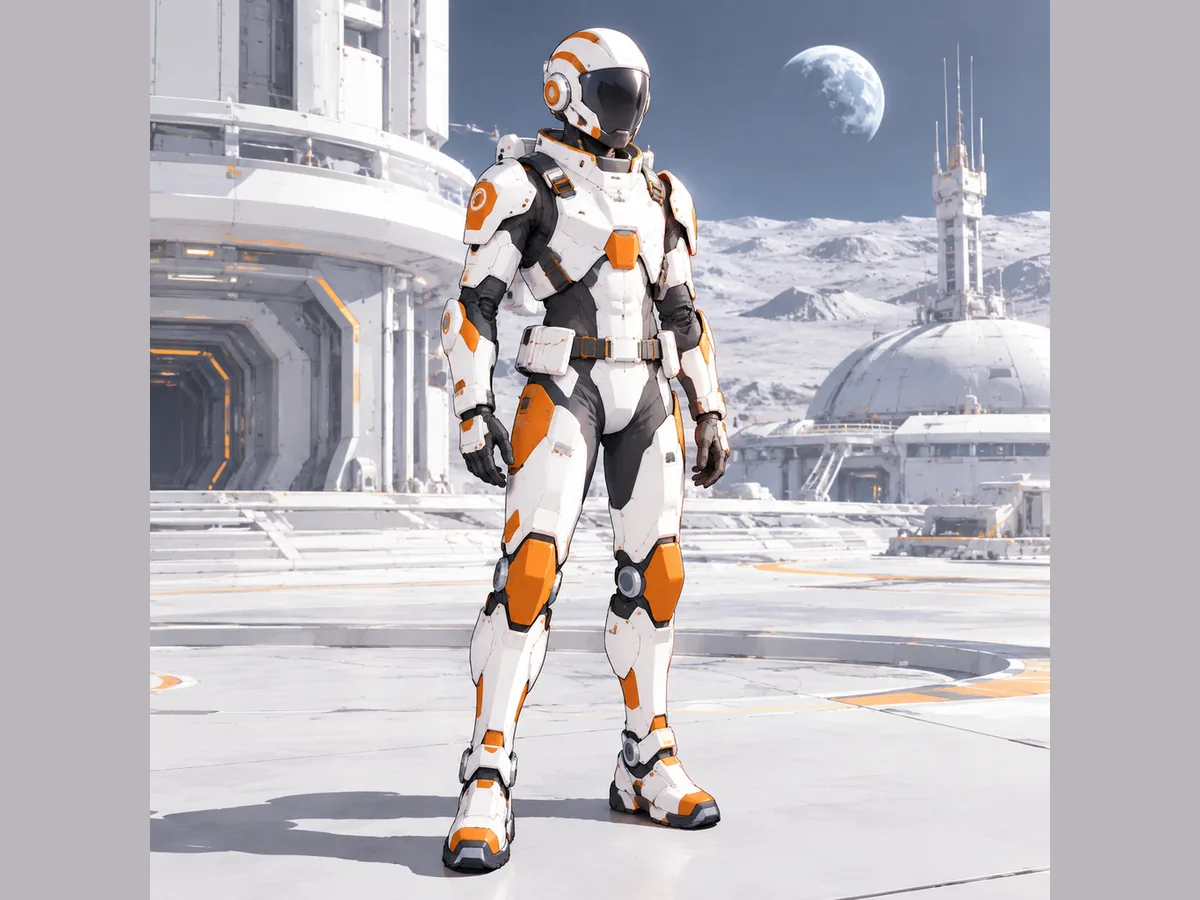
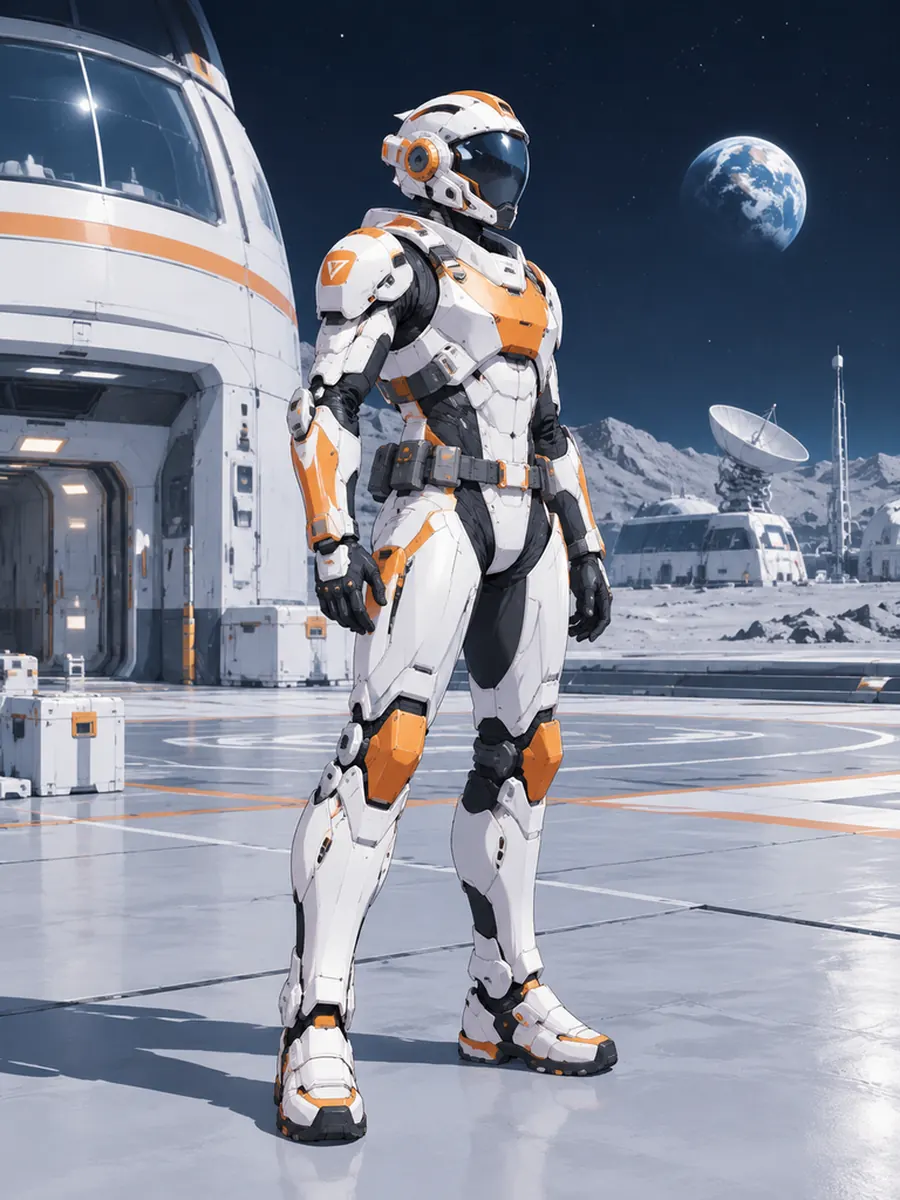 Sci-Fi
Illustrate an original armored orbital guard in white and orange, standing unarmed inside a moon base, clean cel shading, full-body silhouette, and cool lighting.
Try This Prompt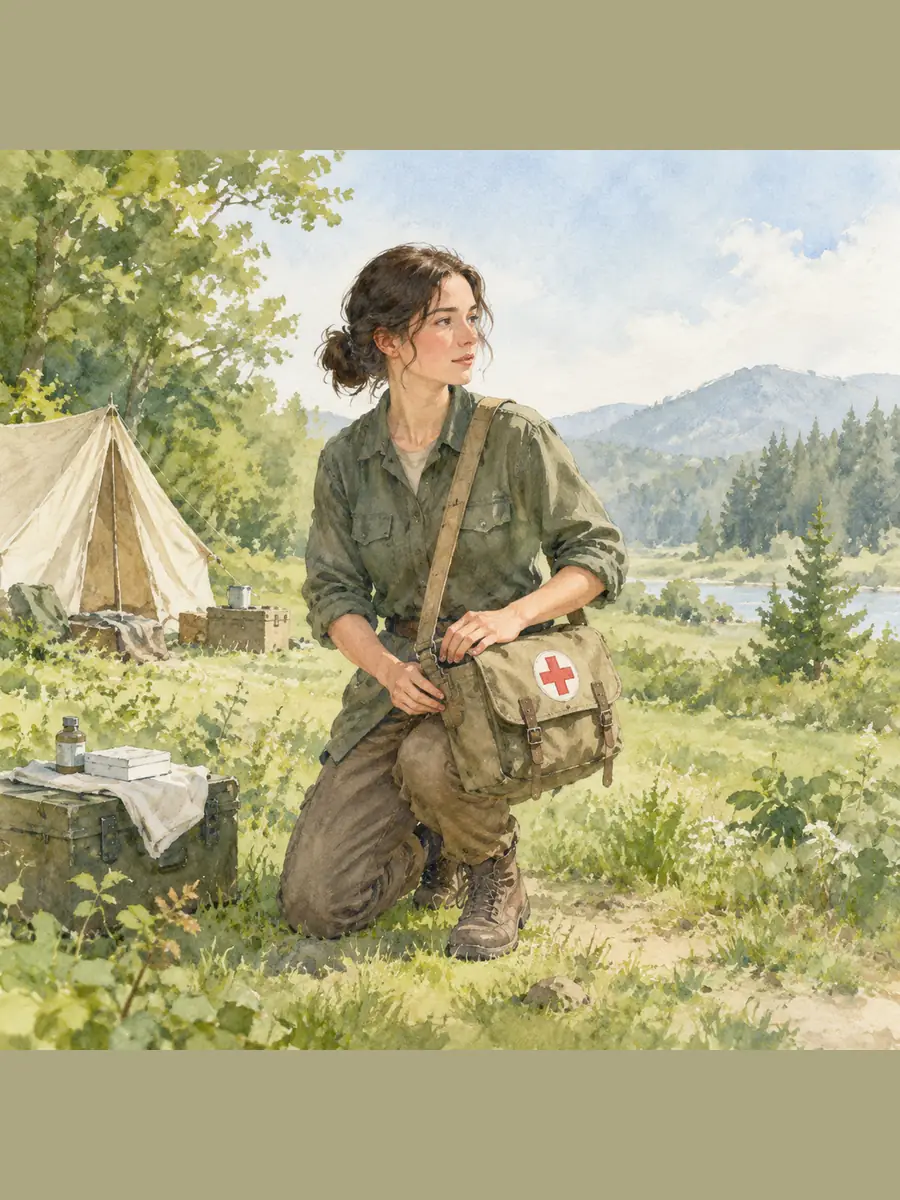 Illustration
Paint a fictional adult field medic with a canvas bag in a peaceful camp, soft watercolor washes, visible hands, green surroundings, and simple clothing.
Try This Prompt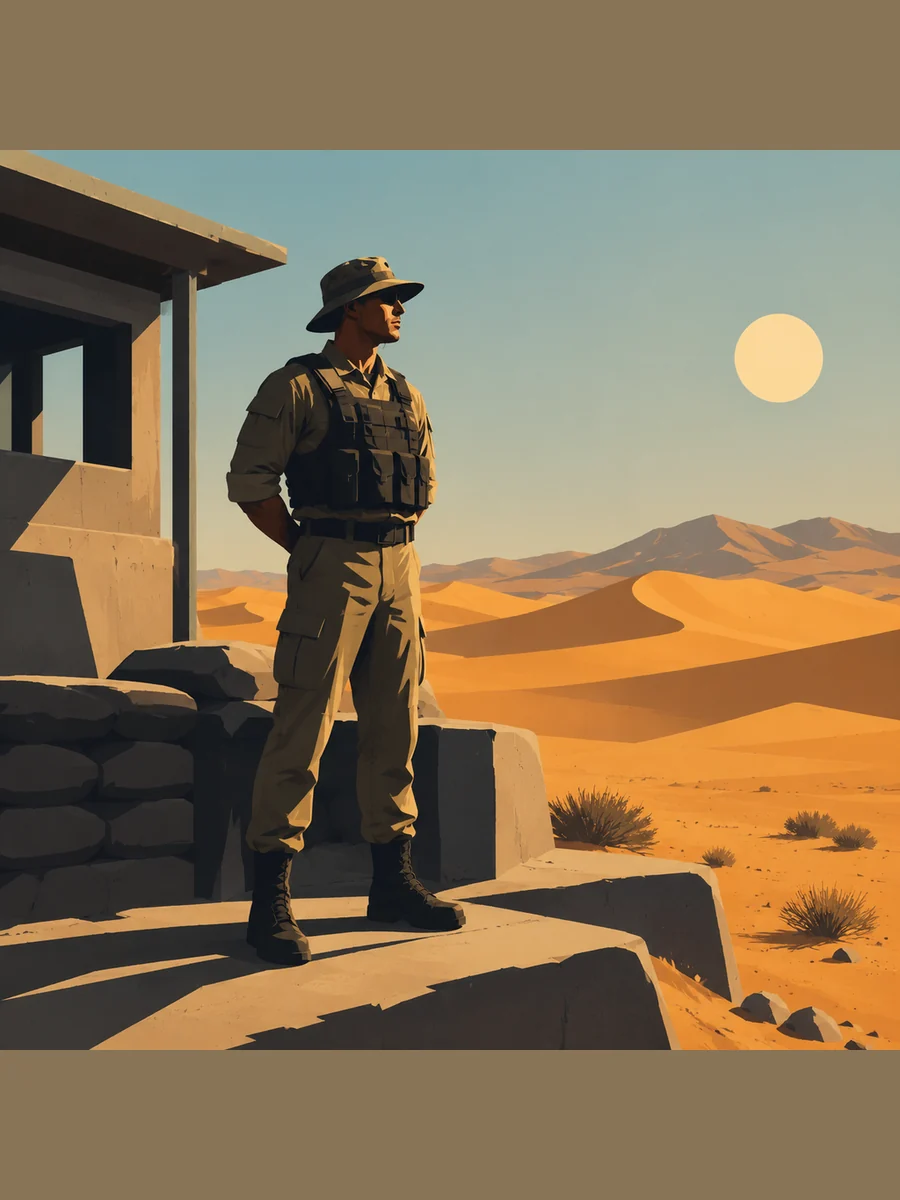 Graphic Art
Create a flat graphic portrait of an unarmed fictional sentry at a desert station, ochre dunes, charcoal silhouette, geometric shadows, and no lettering.
Try This Prompt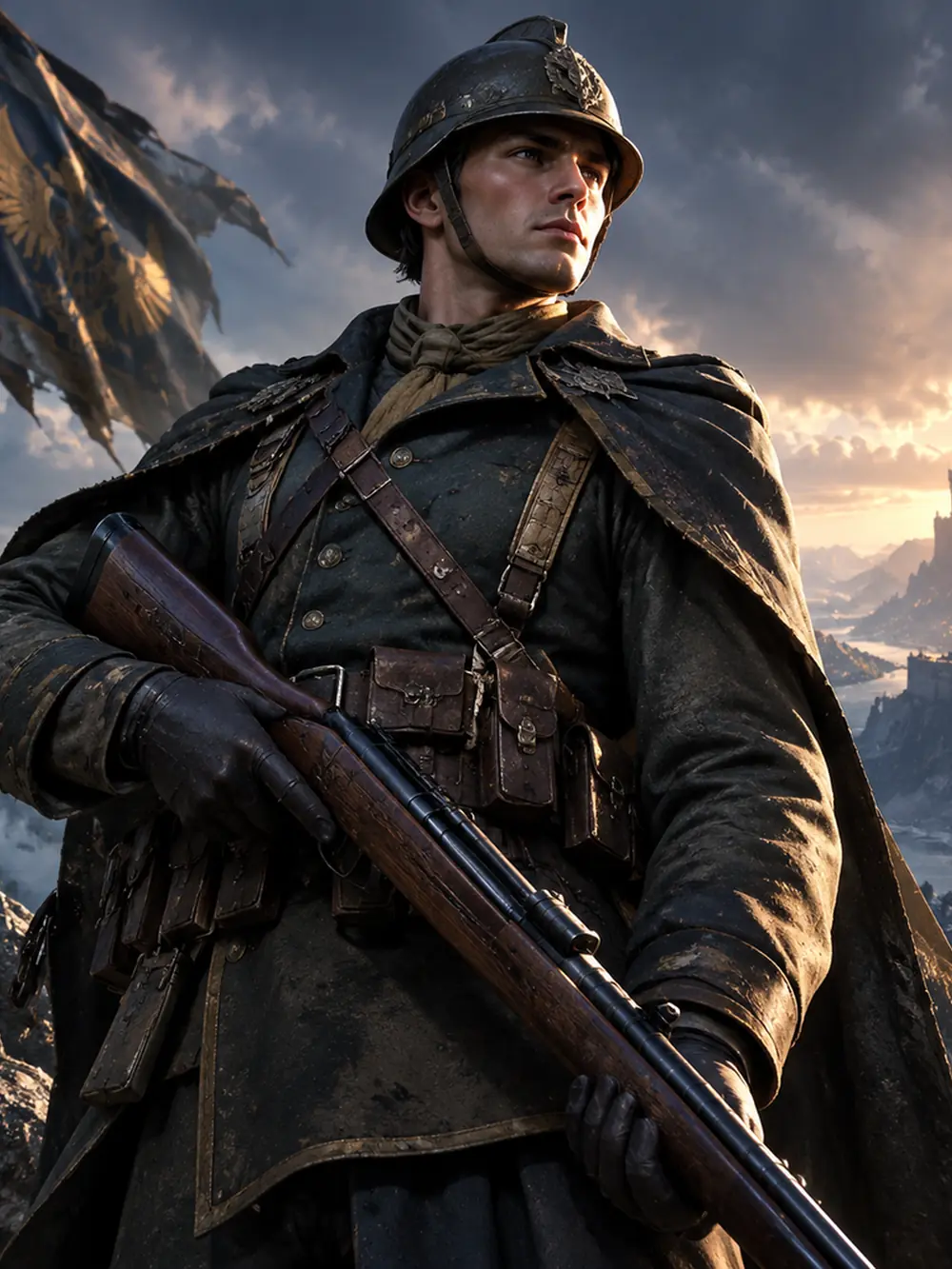 Cinematic
Create a fictional adult sentry in a dark cloak and helmet at a rocky lookout, layered costume, quiet stance, cinematic clouds, and natural proportions.
Try This Prompt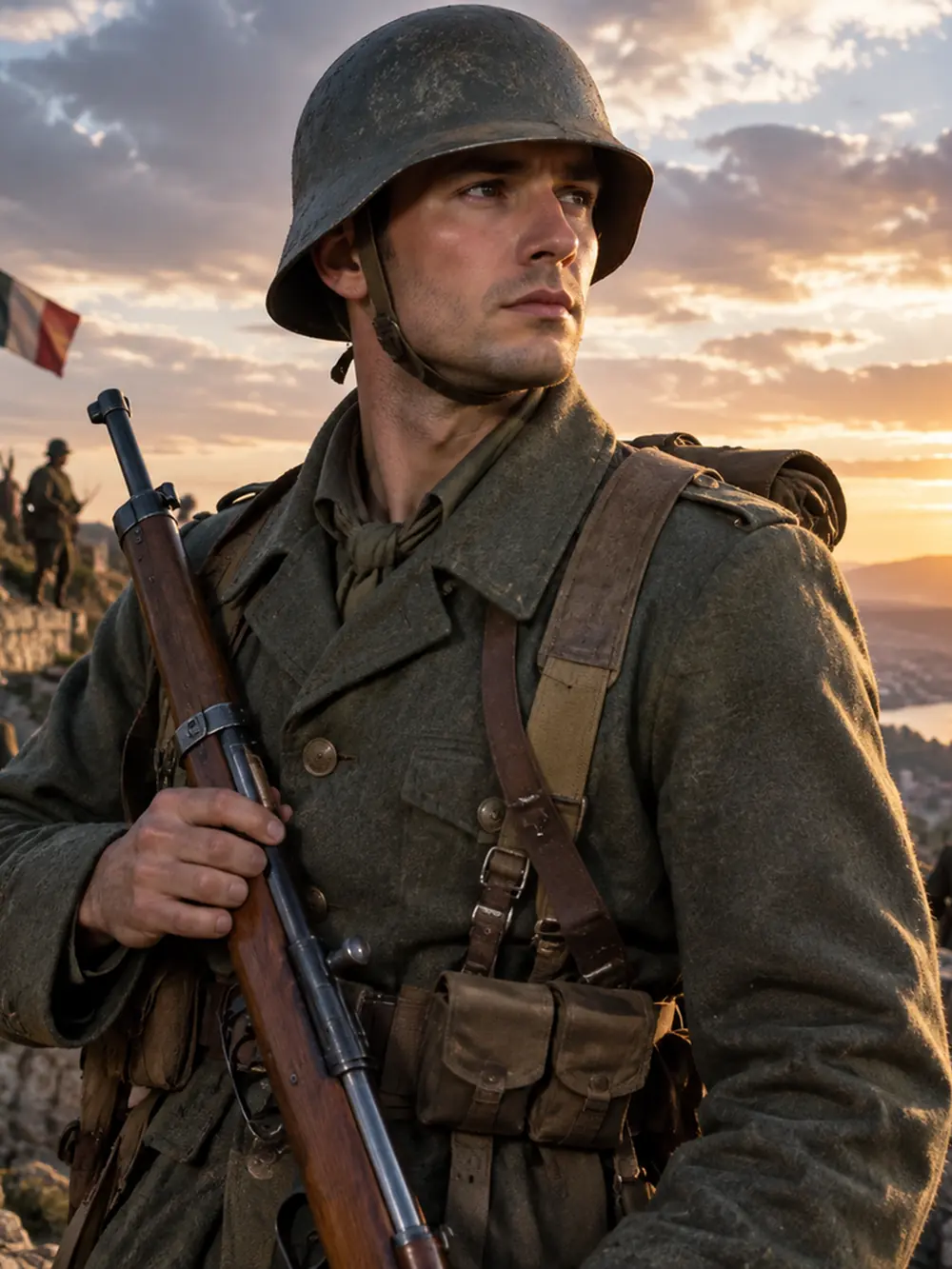 Cinematic
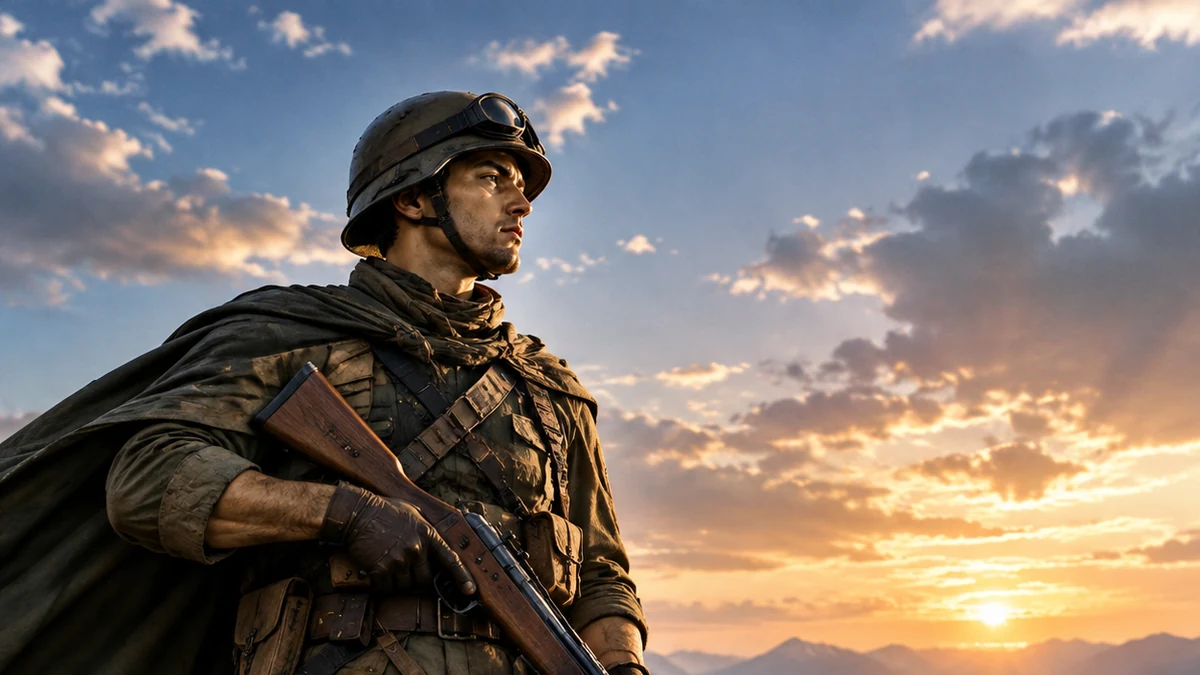
Show a fictional adult field soldier in olive clothing and helmet at sunset, weathered fabric, relaxed stance, distant terrain, and a thoughtful expression.
Try This Prompt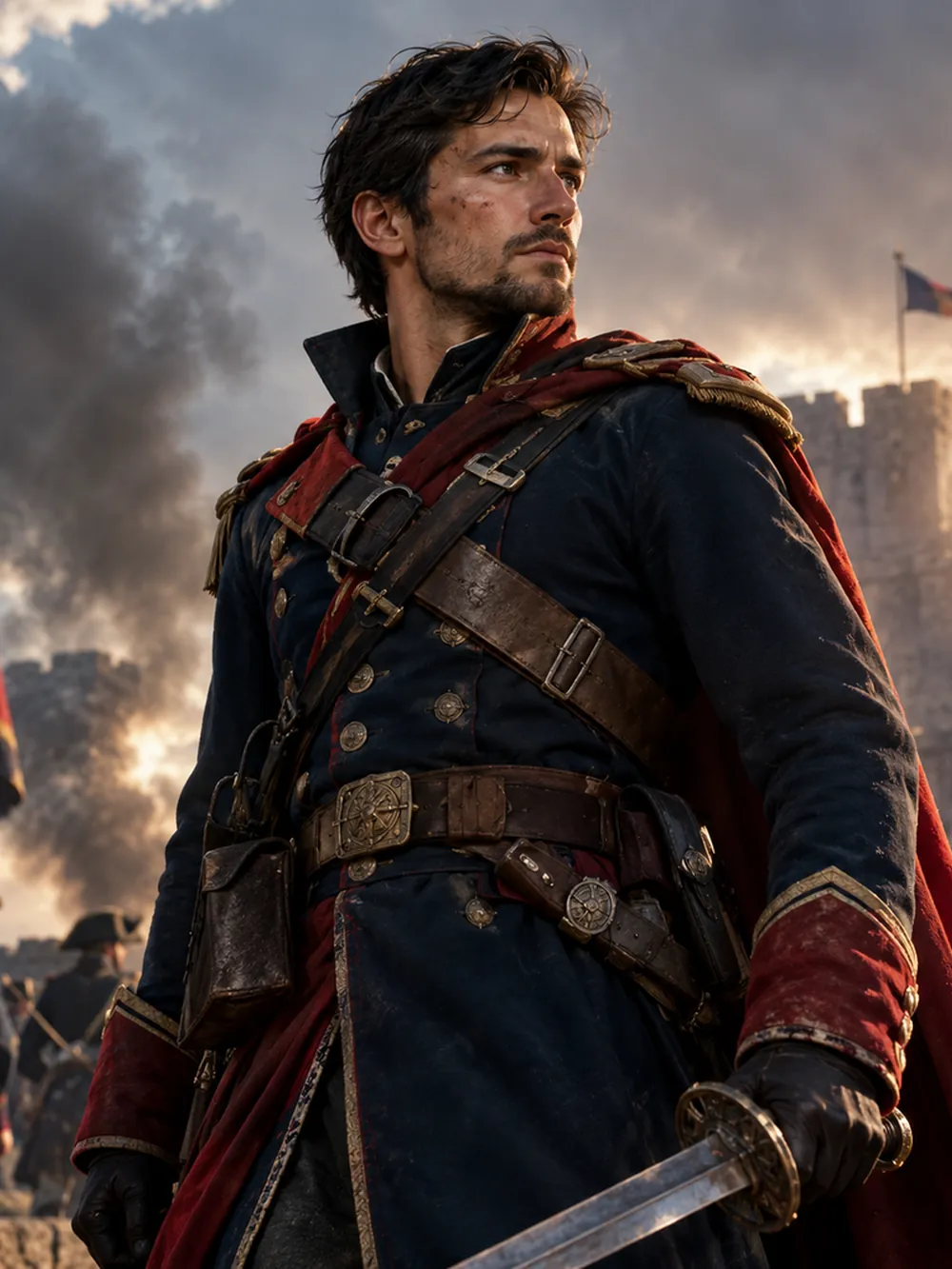 Historical Fantasy
Illustrate a fictional courier in a dark tailored coat with red trim, leather straps, a windswept mountain setting, and restrained historical-fantasy styling.
Try This Prompt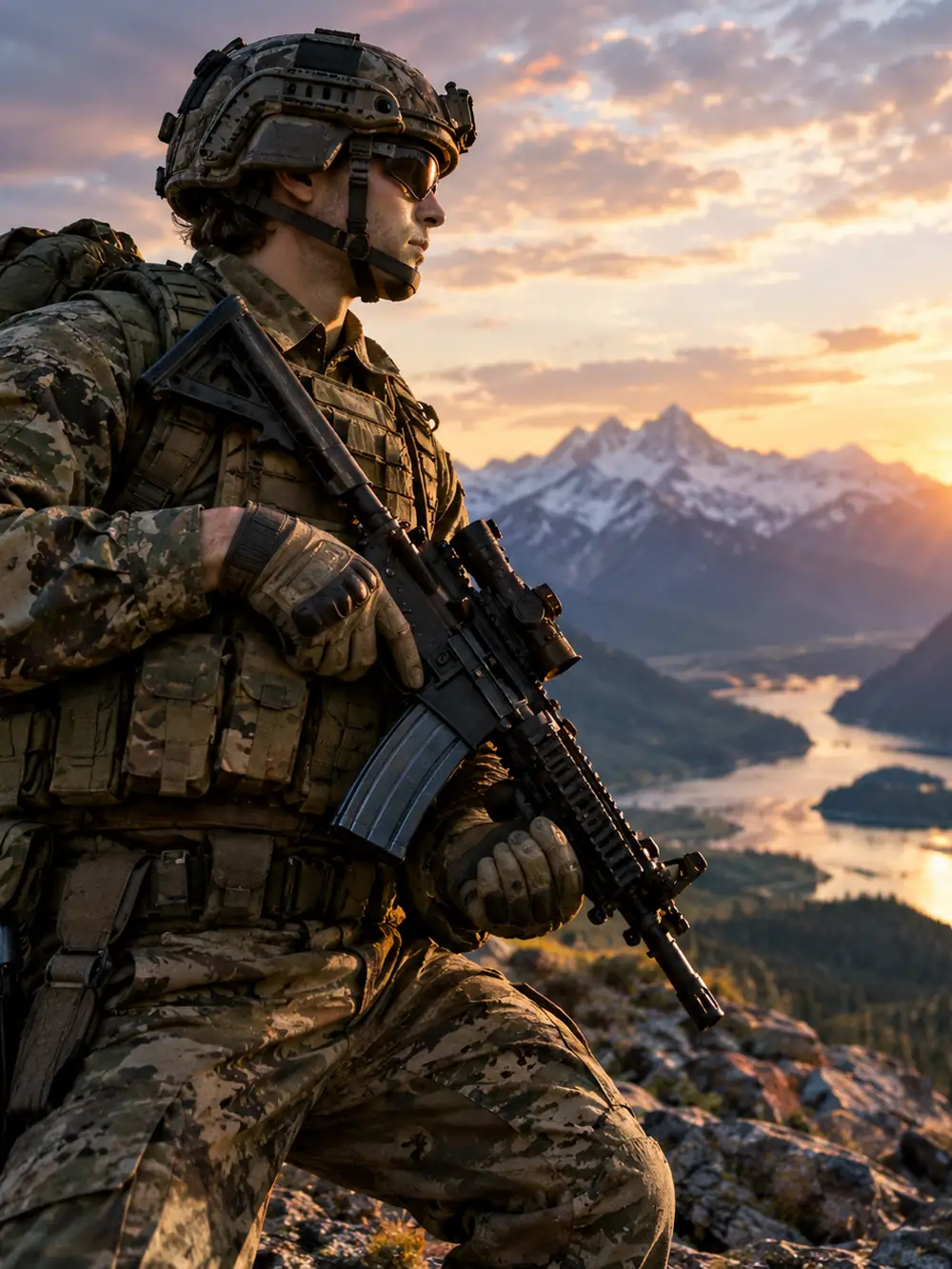 Cinematic
Create a fictional modern mountain patrol character in layered outdoor uniform, seen in profile above an alpine lake, warm sunset lighting, and detailed fabric.
Try This Prompt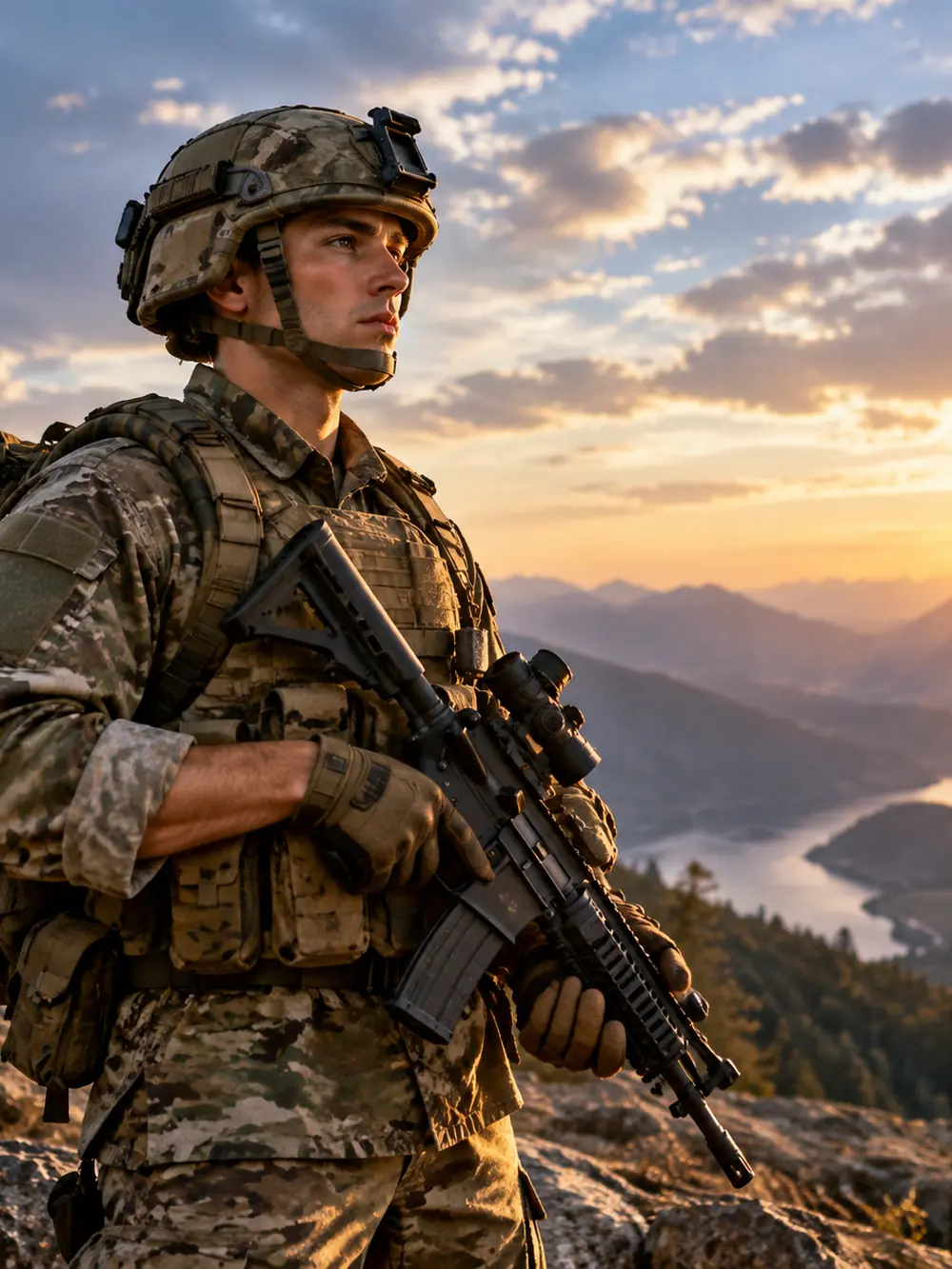 Cinematic
Show a fictional adult scout in practical camouflage clothing at a high mountain overlook, quiet expression, visible equipment straps, and a broad sunset horizon.
Try This Prompt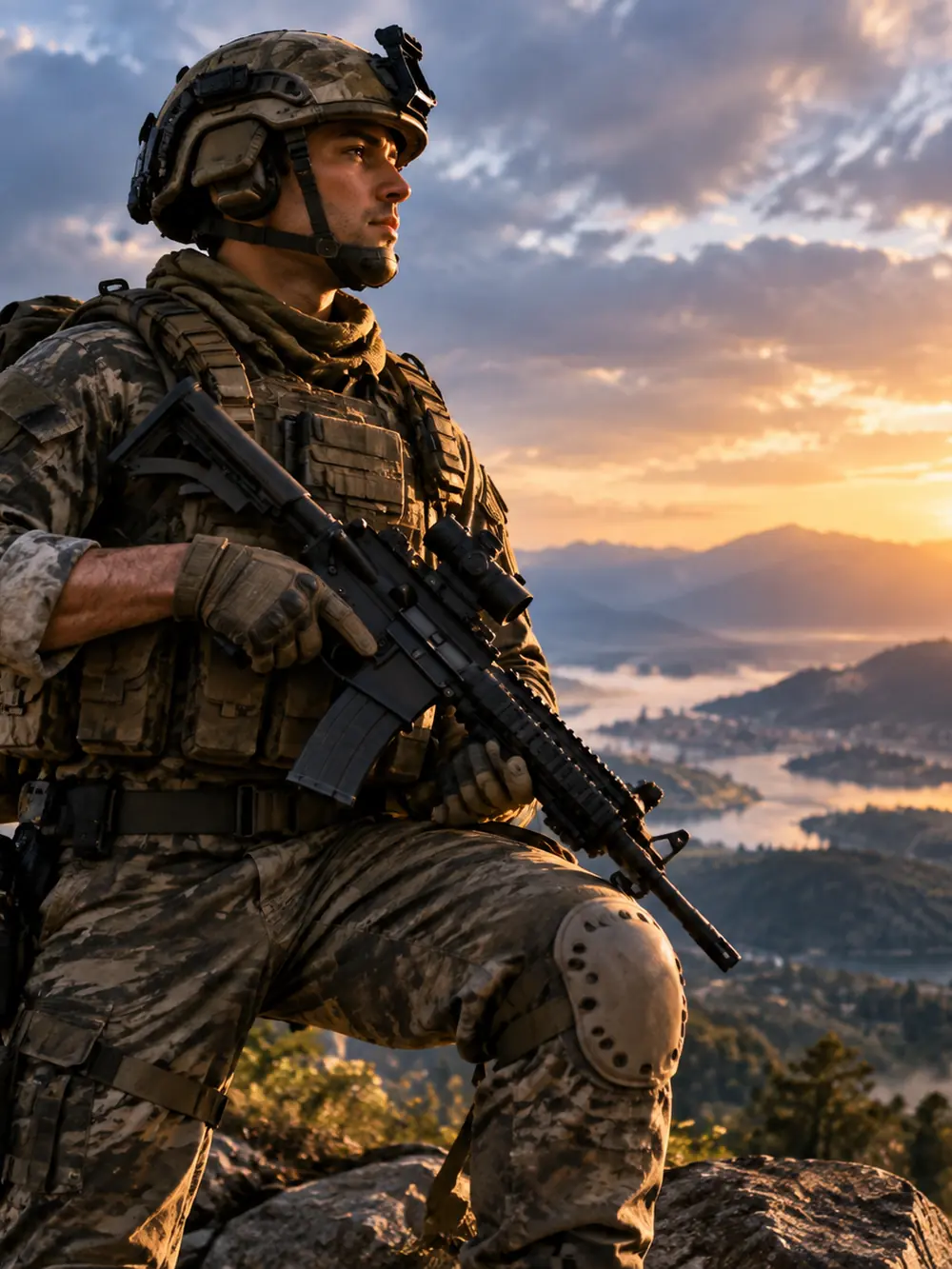 Cinematic
Create a fictional scout resting on a rocky ridge above a mountain lake, layered field gear, side view, golden-hour light, and a calm scene.
Try This Prompt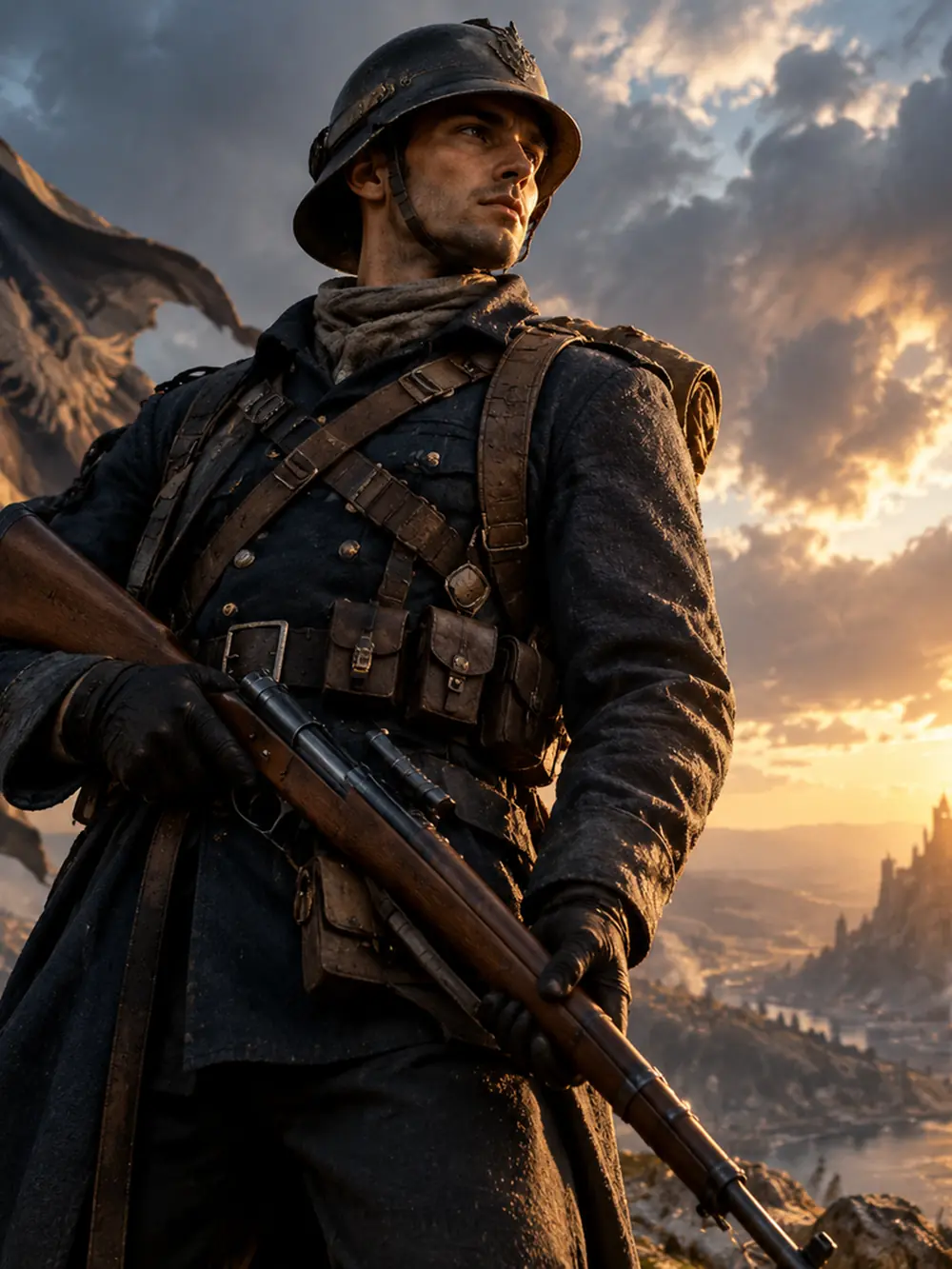 Historical Fantasy
Paint a fictional adult sentry in a dark windblown cloak and helmet, rocky alpine background, dramatic clouds, subtle metallic details, and a restrained palette.
Try This PromptSeparate historical inspiration, contemporary fiction, and future settings so the clothing and equipment tell a coherent visual story.
Separate historical inspiration, contemporary fiction, and future settings so the clothing and equipment tell a coherent visual story.
Visualize scouts, couriers, sentries, and medics through posture and practical equipment, without relying on action scenes or graphic imagery.
Explore helmet profiles, shoulder plates, cloth layers, and material contrast for an original science-fiction character roster.
Set the character in a snowy outpost, desert station, or quiet field camp. Environment changes can reveal different sides of the same concept.
Use the AI soldier image generator for painted artwork or cinematic portraits; choose the treatment that matches your game, story, or presentation.
Inspect the full outfit and close details before using a concept. Generated uniforms can mix historical or functional features incorrectly.
Use the AI soldier image generator for early visual directions. Illustration and 3D production offer different forms of control once the character brief is clear.
| Criteria | GlobalGPT Character Concepts | Manual Illustration | 3D Character Modeling |
|---|---|---|---|
| Useful for | Exploring a fictional role, era, and mood | Directing precise costume and narrative details | Building a character for multiple camera views |
| How details change | Revise the prompt and inspect variations | Edit individual drawn or painted elements | Edit mesh geometry, textures, and materials |
| Typical result | A concept image for review | An illustration or reference sheet | A 3D character asset; rigging is a separate step |
| Review before use | Anatomy, costume coherence, invented insignia | Source references and design consistency | Topology, proportions, and material behavior |
Fictional creative briefs, not customer testimonials. Any displayed stars are decorative and are not customer ratings.
For a tabletop scout, pair a weathered cloak with practical packs and a readable silhouette, then inspect straps and hands.
For a science-fiction pitch, explore rounded armor and a calm stance before adding squad colors or environment details.
For historical-inspired fiction, use a clear period reference and keep uncertain costume details out of claims about real events.
Selected Arena entries, updated Oct 5, 2026. General preference scores; model variants may differ from those in GlobalGPT. These are not tests of this specific task.
| Rank | Model | Arena Rating | Votes | Rank Range | Price / Image |
|---|---|---|---|---|---|
| #1 | gpt-image-2 (medium) OpenAI / Proprietary | 1381.71 | 75014 | #1-#1 | 0 |
| #2 | mai-image-2.6-preview Microsoft AI / Proprietary | 1330.7 | 6418 | #2-#3 | - |
| #3 | grok-imagine-image-2.0 (low) SpaceXAI / Proprietary | 1315.6 | 2675 | #2-#4 | - |
| #4 | reve-2.1 Reve / Proprietary | 1301.61 | 7580 | #3-#4 | - |
Source: Arena Leaderboard
An AI soldier image generator turns a written character description into fictional military-themed artwork. You can direct the era, uniform, role, mood, and rendering style for stories, games, or personal concept development.
Yes. Describe the armor shape, helmet, materials, and environment, then choose a painted, graphic, or rendered look. Keep the design visually original instead of requesting an exact copy of a recognizable game character.
Not automatically. AI images may combine equipment from different periods or invent insignia. If historical accuracy matters, compare the costume with reliable references and correct visible errors before presenting the artwork as period-specific.
Yes. Specify an unarmed medic, courier, technician, or sentry with hands visible. Describe bags, communication equipment, or protective clothing to make the role understandable without depicting combat.
Prioritize one era, one role, and one setting. Add clothing details and lighting, then review anatomy and equipment. Overloading a prompt with many conflicting references can make the design less coherent.